Tuk-Tuk 10-Cent Tours: The Hidden Cost of the World's Cheapest Ride
You step out of your hotel in Bangkok, eager to explore the Grand Palace. Immediately, a friendly tuk-tuk driver pulls up, offering you a massive, ...
Tuk-Tuk 10-Cent Tours: The Hidden Cost of the World's Cheapest Ride
You step out of your hotel in Bangkok, eager to explore the Grand Palace. Immediately, a friendly tuk-tuk driver pulls up, offering you a massive, multi-hour tour of the city's best temples for the unbelievably low price of 10 Baht (about 30 cents). He speaks excellent English, shows you a laminated map of the route, and seems genuinely excited to show off his city. You think you’ve just scored the bargain of a lifetime.
Two hours later, you haven't seen a single temple. Instead, you are sitting in your third high-pressure tailor shop of the day, drinking complimentary tea while aggressive salesmen try to bully you into buying a $500 custom cashmere suit you don't need. The 10-cent tour has turned into an all-day hostage situation.
How the 10-Cent Tuk-Tuk Scam Works
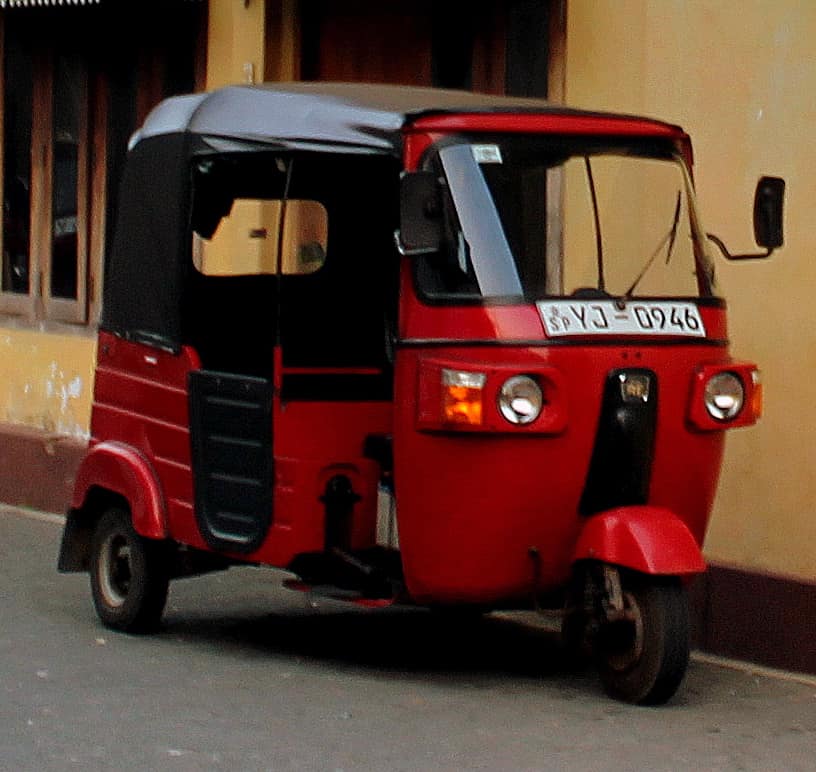
The Tuk-Tuk scam is an institution in Southeast Asia. It is a highly coordinated, kickback-driven economy that relies on a tourist's desire for a bargain and their reluctance to be rude to a "friendly local."
The Hook
The scam always begins with an offer that is simply too good to be true. Drivers will loiter around major tourist attractions, hotels, or shopping districts. They will approach you and offer a full-day tour for a negligible amount of money. To make the offer seem legitimate, they often fabricate a compelling reason for the discount: "It is a national holiday," "It is a special government promotion for tourists," or "My boss is paying for the gas today."
The Diversion
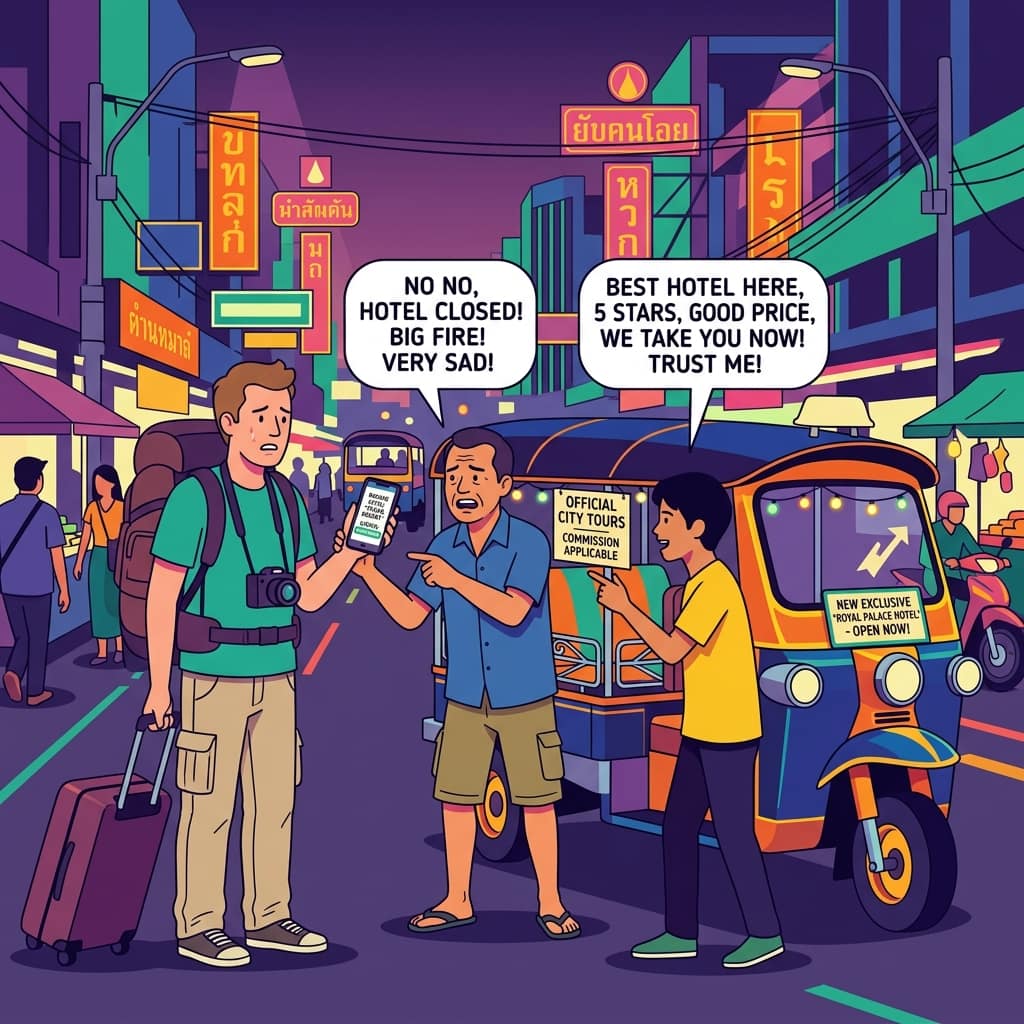
Once you are in the tuk-tuk, the route quickly deviates from the promised itinerary. If you ask to go to a specific temple, the driver will smoothly inform you that the temple is "closed for lunch," "closed for a Buddhist holiday," or "only open to locals today." Luckily, he knows an even better temple that is open right now, but it happens to be right next to a special government export center that is having a one-day-only tax-free sale.
Pro Tip: If a tuk-tuk driver or friendly stranger on the street tells you a major tourist attraction is closed, they are almost certainly lying. Always walk to the main ticket gate to verify it yourself.
The Kickback Run
The core of the scam is the stops. The driver will take you to gem stores, tailor shops, souvenir emporiums, or shady travel agencies. The driver receives a commission—usually in the form of gas vouchers or a small cash payout—simply for bringing a tourist through the door. If you actually buy something, the driver gets a massive percentage of the sale.
Inside these shops, the sales tactics are incredibly aggressive. The "gems" are often worthless colored glass, and the "custom Italian cashmere" suits are frequently cheap synthetic blends stitched together poorly. If you refuse to buy anything, the previously friendly tuk-tuk driver may become hostile, refuse to take you to your original destination, or simply abandon you on the outskirts of the city.
Where Are You Most Likely to Encounter This?
While variations of this scam exist worldwide (such as carpet shop tours in Morocco or Turkey), the specific "cheap tuk-tuk" model is heavily concentrated in Southeast Asia.
- Bangkok, Thailand: The undisputed capital of this scam. It is heavily centered around the Grand Palace, Wat Pho, and Khao San Road. The stops are almost exclusively tailor shops and gem centers.
- Chiang Mai, Thailand: Here, the scam often involves being taken to overpriced silk factories, umbrella making villages, or silver jewelry workshops outside the city center.
- New Delhi, India: Rickshaw drivers will claim your hotel has burned down or moved, and will take you to a "tourist information center" (a fake travel agency) to book an overpriced, terrible alternative hotel or tour package.
Recognizing the Warning Signs
Avoiding this scam is relatively easy once you know the script the drivers use. Watch out for these red flags:
- Fabulously Cheap Fares: If a ride that should cost $5 is being offered for 30 cents, you are the product, not the customer.
- The "Closed" Excuse: Any driver claiming a major international tourist site is suddenly closed should be immediately dismissed.
- The Friendly English-Speaking Stranger: Often, a well-dressed local will strike up a conversation with you on the street, ask where you are from, and then "coincidentally" hail a tuk-tuk for you, instructing the driver to take you to a special sale. This stranger is a "catcher" working in tandem with the driver.
Important: Never buy jewelry, gems, or custom clothing on a tour organized by a tuk-tuk driver. The markups are astronomical, and the quality is universally terrible. Legitimate high-end jewelers do not need tuk-tuk drivers to drag tourists in off the street.
How to Enjoy Tuk-Tuks Safely
Tuk-tuks are a fun, iconic way to travel in Asia. You don't have to avoid them entirely; you just have to use them correctly.
Hail Moving Tuk-Tuks
Drivers parked outside tourist attractions are waiting for victims. Drivers who are actively moving through traffic are usually just looking for legitimate fares. Flag down a moving tuk-tuk rather than approaching a parked one.
Negotiate Firmly
Before getting in, state your exact destination. Ask for the price. If they offer an incredibly low price, say, "No stops. I will pay you 100 Baht to go directly to the temple, no shopping." A legitimate driver will accept the fair market rate. A scam driver will often refuse the higher fare because the shopping kickbacks are worth much more to them.
Use Ride-Share Apps
In many Asian cities, apps like Grab or Bolt allow you to hail tuk-tuks or local taxis at a fixed, algorithm-determined price. This eliminates haggling and ensures the driver will take you directly to the destination pinned in the app.
What to Do If You're Caught in the Scam
If you realize you've been duped and are currently trapped on a shopping tour, take control of the situation.
- Walk Away: You are not a prisoner. When the tuk-tuk stops at the second tailor shop, simply step out, hand the driver his 10 Baht, and walk away. Flag down a legitimate taxi to get to your real destination.
- Do Not Make Sympathy Purchases: Do not buy a cheap tie or a worthless ring just to make the salespeople or the driver happy. You owe them nothing.
- Don't Argue: There is no point in arguing with the driver about breaking promises. They run this scam ten times a day. Keep calm, end the ride, and move on with your vacation.
Frequently Asked Questions (FAQs)
Q: Is it dangerous to ride in a scam tuk-tuk? A: Generally, no. These scams are about extracting money through high-pressure sales, not physical violence. However, it is a massive waste of your precious vacation time.
Q: What if I actually want to buy a custom suit in Bangkok? A: Bangkok has incredible tailors. Do your research online beforehand, read reviews, and take the BTS Skytrain or a metered taxi directly to a reputable shop. Never go to a tailor recommended by a tuk-tuk driver.
Q: Can I just take the 10-cent tour and refuse to buy anything at the stops? A: Some backpackers try to "game" the scam by taking the cheap ride and stubbornly sitting in the shops without buying anything. This is highly discouraged. It angers the shop owners, the driver may abandon you far from your hotel, and it wastes hours of your day.
Q: Do the tourist police care about this scam? A: In major cities like Bangkok, the tourist police are well aware of the scam, and there are signs warning tourists about it. However, because you technically agreed to get in the tuk-tuk and agreed to enter the shops, it is difficult to prosecute as a crime. It is viewed as a "buyer beware" situation.
Get more practical guides like this
Follow the RSS feed or send Sahi.info to your WhatsApp circle so the practical guides keep moving.