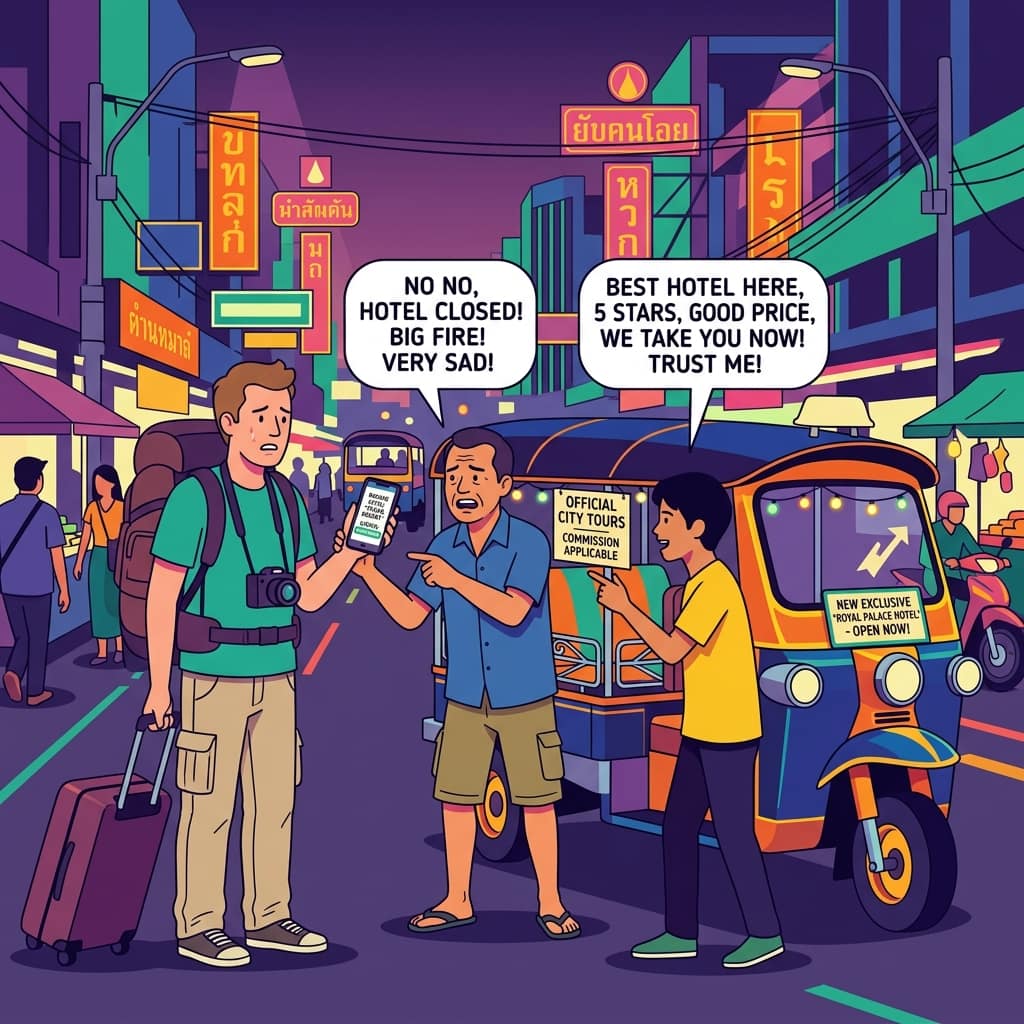
The Short-Change Trick: How Cashiers Profit off Tourist Confusion
Dealing with foreign currency is one of the most stressful parts of traveling. You are constantly doing mental math to figure out exchange rates, s...
The Short-Change Trick: How Cashiers Profit off Tourist Confusion
Dealing with foreign currency is one of the most stressful parts of traveling. You are constantly doing mental math to figure out exchange rates, staring at brightly colored bills trying to remember which one is worth five dollars and which one is worth fifty, all while a long line of impatient locals forms behind you. Scammers know that tourists are often flustered at the checkout counter, and they use this anxiety to execute one of the oldest and most common retail scams in the world: the Short-Change Trick.
Whether you are buying a souvenir from a street market, paying a taxi driver, or even checking out at a seemingly reputable convenience store, the Short-Change Trick can happen anywhere cash is exchanged. It is a crime of opportunity that relies entirely on sleight of hand, rushing the customer, and exploiting your unfamiliarity with the local money. In this guide, we will examine the various ways scammers execute this trick, how to avoid being a victim, and what to do if you catch someone in the act.
What is the Short-Change Trick?
At its most basic level, the Short-Change Trick is exactly what it sounds like: a cashier or vendor intentionally hands you back less change than you are owed after a transaction. Because tourists are often slow to count unfamiliar money, the scammer hopes you will simply stuff the change into your pocket and walk away before realizing you have been ripped off.
While it sounds simple, professional scammers employ several psychological and physical tactics to ensure the trick works smoothly.
The "Small Denomination" Avalanche
Instead of handing you a few large bills as change, the cashier will hand you a massive, confusing stack of the smallest possible denominations and coins. By the time you mentally process the math and count through the huge stack of low-value notes, they have already called the next customer forward, making you feel pressured to move along.
Fascinating Fact: Some experienced scammers are practically magicians with their hands. They will accurately count the correct change directly in front of you, but skillfully "palm" or slide one of the larger bills off the bottom of the stack right before they hand the money over to you.
The Bill Swap (The "You Only Gave Me a 10" Trick)
This is a more aggressive variation of the scam. You hand the cashier a large bill, such as a 50 Euro note, to pay for a 10 Euro item. The cashier takes your 50, swiftly drops it out of sight behind the counter, and immediately produces a 10 Euro note, claiming that is what you handed them. Because the transaction happened so fast, and because you are in a foreign country, you might doubt your own memory and apologize, effectively letting them steal 40 Euros.
How to Prevent the Short-Change Trick
The best defense against getting short-changed is projecting confidence. If a vendor believes you are paying close attention and understand the local currency, they will almost always choose an easier target.
1. Familiarize Yourself with the Currency
Before you even leave your hotel on your first day, take five minutes to study the local cash. Look at the colors, the sizes of the bills, and the watermarks. Understand the difference between the coins. If you look like you know what you are doing at the register, scammers will hesitate to try anything funny.
2. State the Amount Out Loud
This is the single most effective way to prevent the "Bill Swap" trick. When you hand cash to a vendor, make eye contact, hold the bill up slightly, and state the amount clearly.
Pro Tip: Always clearly state the denomination of the bill you are handing over. For example, say, "Here is a fifty Euro note," as you pass it to the cashier. This immediately signals that you are paying attention and eliminates any "confusion" about what you handed them.
3. Do Not Let Yourself Be Rushed
Scammers rely on creating a sense of urgency. They might sigh heavily, gesture to the line behind you, or start rapidly speaking to you in the local language to fluster you. Ignore them. Take a deep breath, stand your ground, and count your change at your own pace. The few seconds it takes you to verify your money is not going to ruin anyone's day.
Important: Never walk away from the register or the taxi without fully counting your change. Once you take a few steps away from the point of sale, it becomes your word against theirs, and you have lost all leverage to dispute the transaction.
4. Pay with Exact Change
The easiest way to avoid being short-changed is to eliminate the need for change altogether. Whenever possible, break your large bills at a trusted bank or your hotel front desk, and use small bills and coins to pay for minor purchases like street food or souvenirs.
What to Do If You Catch Them
If you count your change and realize it is short, or if they try to claim you handed them a smaller bill, you must act immediately.
Do not get angry or start yelling "Thief!" Instead, be firm, polite, and unyielding. Hold the change out and say, "Excuse me, I gave you a 50, and the item was 10. I should have 40 back, but this is only 20."
In 99% of cases, the scammer knows they have been caught. To avoid a scene or the involvement of police, they will employ the "honest mistake" defense. They will smack their forehead, apologize profusely for the "confusion," and quickly hand you the rest of your money. Accept the apology, take your money, and walk away.
Frequently Asked Questions (FAQs)
Q: Does this only happen with street vendors and markets? A: No. While it is common in markets, the Short-Change trick frequently happens in licensed taxis, train station ticket windows, bars, and even standard convenience stores. Always be vigilant regardless of the venue.
Q: What if the vendor aggressively insists I gave them a smaller bill and refuses to give me the right change? A: If you are absolutely certain of what you handed them, do not back down. Mention that you would like them to check the cameras, or state that you are going to call the tourist police to resolve the dispute. Usually, the threat of authorities is enough to make them "find" your original bill.
Q: Is it safer to just use a credit card everywhere? A: Yes, using a travel credit card with no foreign transaction fees eliminates the risk of short-changing entirely. However, many small vendors, markets, and rural areas remain cash-only, so you will still need to know how to handle cash safely.
Q: I walked away and realized ten minutes later I was short-changed. What can I do? A: Unfortunately, very little. Once you have left the immediate vicinity of the transaction, the vendor will simply deny it, and the police will not be able to help without proof. This is why counting your change at the counter is vital.
Q: Do vendors ever short-change you with counterfeit bills? A: Yes, this is a dangerous variation of the scam. When returning change for a large note, a vendor might slip a counterfeit bill into your stack. Always briefly check the texture and watermarks of large bills given to you in change.
Get more practical guides like this
Follow the RSS feed or send Sahi.info to your WhatsApp circle so the practical guides keep moving.