The "Express" Boat and Bus Upcharge: Navigating Tourist Transport Traps
You’ve carefully planned your island-hopping itinerary in Southeast Asia or your cross-country bus trip in South America. Arriving at the ferry ter...
The "Express" Boat and Bus Upcharge: Navigating Tourist Transport Traps
You’ve carefully planned your island-hopping itinerary in Southeast Asia or your cross-country bus trip in South America. Arriving at the ferry terminal or bus station, you are immediately approached by a helpful ticket agent in an official-looking lanyard. They inform you that the standard local ferry takes five agonizing hours, stops at every port, and is packed with livestock. However, for just $20 more, you can buy a ticket for the "VIP Express Air-Conditioned Tourist Boat" that takes half the time.
You gladly hand over the cash for the upgrade. An hour later, you are herded onto a rusty, sweltering, slow-moving local ferry—the exact same boat you would have been on if you had bought the $5 standard ticket. You’ve just fallen victim to the "Express" Upcharge scam.

The Mechanics of the "Express" Upcharge
The transport upcharge scam is a classic bait-and-switch operation. It thrives in chaotic transport hubs where language barriers are high, official signage is poor, and tourists are anxious about missing their connections.
The Aggressive Sales Pitch
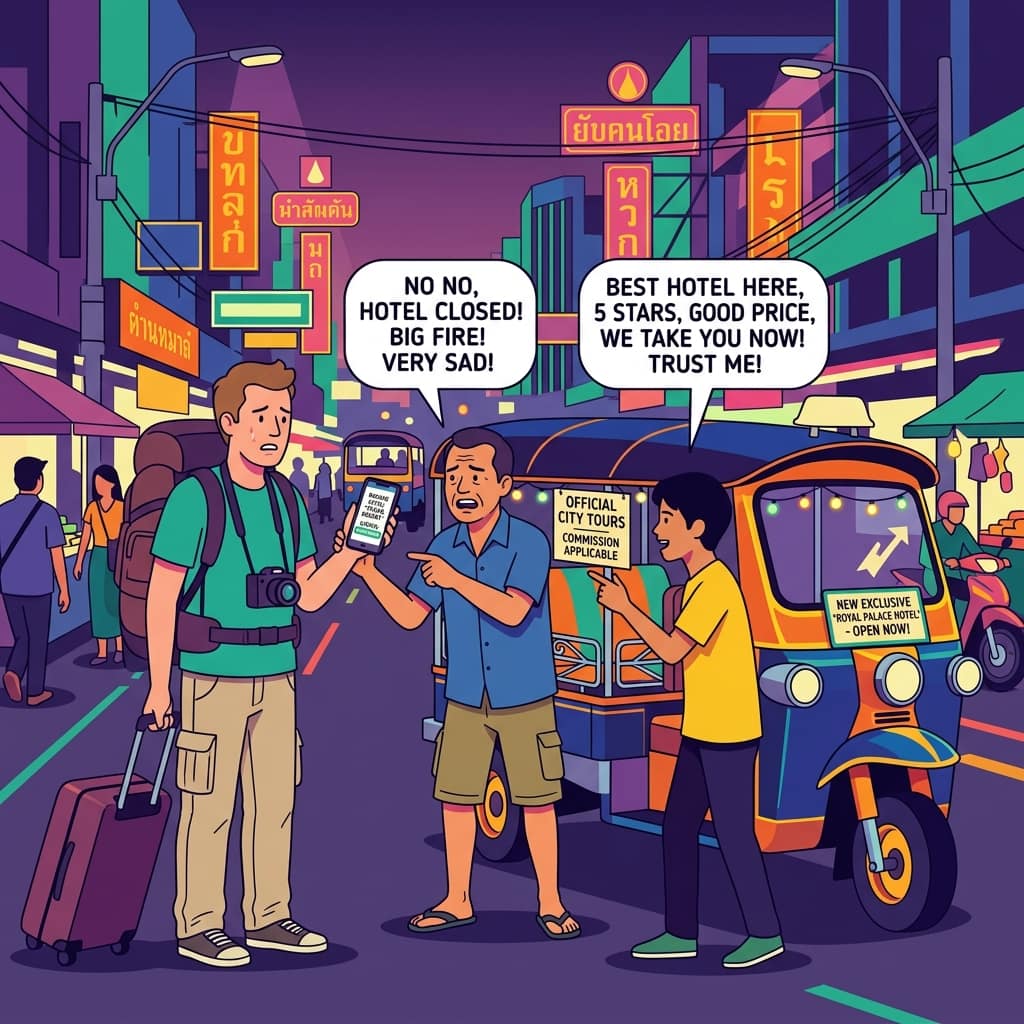
The scam usually begins outside the official ticket office. Touts, fake travel agents, or even taxi drivers will intercept you before you reach the legitimate ticket counter. They use high-pressure sales tactics, emphasizing how terrible, dangerous, or slow the "local" option is. They paint a picture of luxury regarding their "VIP" or "Express" option—promising reclining seats, air conditioning, direct routes, and onboard Wi-Fi.
The Fake Ticket
Once you agree, you are issued a ticket. This ticket might look completely legitimate, complete with stamps, holograms, and the word "VIP" printed in bold letters. In reality, it is either a counterfeit ticket or simply a standard local ticket that the tout purchased for a fraction of what you paid them.
Pro Tip: Never buy a ticket from someone standing outside a bus or ferry terminal. Always walk past the touts and purchase your ticket directly from the official, physical ticket window inside the station.
The Disappointing Reality
When it is time to board, you present your "VIP" ticket to the driver or boat captain. They will rip it in half without a second glance and point you toward a crowded, hot, and definitively non-express vehicle. When you try to complain that you paid for the Express option, the crew will likely shrug, pretend not to speak English, or simply tell you that the VIP boat is "broken today" and this is the only option. The tout who sold you the ticket is, of course, long gone.
Where is This Scam Most Common?
This scam is heavily reliant on unregulated private transport networks and is most frequently encountered in developing nations with booming backpacker scenes.
- Southeast Asia: The islands of Thailand (Koh Samui, Koh Phangan), ferry routes in Indonesia (Bali to the Gili Islands), and bus routes in Vietnam and Cambodia are notorious for VIP bait-and-switches.
- South America: Bus stations in Peru, Bolivia, and Colombia often feature touts selling non-existent "Cama" (sleeper) or direct express tickets that end up being slow, multi-stop local buses.
- Eastern Europe: Train and bus stations in parts of the Balkans occasionally see fake agents selling "direct" cross-border tickets that require multiple transfers.
Spotting the Red Flags
You can easily avoid being overcharged if you know what to look for when navigating foreign transit hubs.
- Intercepting Touts: The biggest red flag is someone approaching you to sell a ticket before you reach the official counter. Legitimate bus and ferry companies do not need to aggressively hawk tickets in the parking lot.
- Handwritten or Unofficial Tickets: If the ticket you are handed is handwritten on a generic receipt pad, or if the "VIP" designation is just stamped on with ink, it is highly suspect.
- Refusal to Show the Vehicle: If you ask to see the VIP bus or boat before purchasing the ticket and the seller makes excuses ("It is parked at a different pier," or "It arrives in five minutes"), they are lying.
- Prices Not Posted: Official ticket counters usually have prices printed clearly on a board above the window. Touts make up prices based on what they think you can afford to pay.
Important: Always research the actual travel times between destinations before you arrive at the station. If a ferry route geographically requires three hours, a tout promising a one-hour "magic express" boat is lying to you.
How to Protect Yourself and Book Legitimate Transport
Booking transport in a foreign country doesn't have to be a gamble. Follow these steps to ensure you get what you pay for.
Buy Online in Advance
The safest way to avoid transport scams is to book your tickets online through reputable, verified aggregators like 12Go Asia, Bookaway, or Busbud. These platforms vet the operators, display accurate travel times, and provide digital tickets that bypass the station touts entirely.
Go to the Official Window
If you must buy a ticket in person, ignore everyone who speaks to you between your taxi and the ticket office. Walk directly to the branded ticket window. Look for staff wearing official company uniforms and name tags.
Ask Your Hotel for Advice
Local hotel receptionists know the reliable transport companies and the current scams. Ask them which ferry or bus company is the best, what the standard price should be, and exactly where to buy the ticket. Some hotels can even book the legitimate ticket for you for a small, transparent commission.
What to Do If You've Been Scammed
Discovering you've been sold a fake or downgraded ticket is infuriating, but managing your reaction is key.
- Accept the Situation: Once you are at the dock and the boat is leaving, demanding a refund from the crew is useless—they didn't take your money, the tout did. Get on the boat so you don't miss your travel day entirely.
- Document the Fraud: Take photos of the tout (if you still see them), your fake ticket, and the boat or bus you were forced to take.
- Leave Reviews: Warn other travelers by leaving detailed reviews of the specific location, the company name on the ticket, and the tactics used on forums like TripAdvisor or Reddit travel communities.
- Dispute the Charge: If you managed to pay with a credit card (rare for this specific scam, but possible if bought at a fake travel agency), contact your bank immediately to dispute the charge as fraudulent.
Frequently Asked Questions (FAQs)
Q: Are there actually real VIP or Express options available? A: Yes. Many routes offer legitimate fast ferries or luxury buses. The key is ensuring you buy the ticket directly from the verified operator rather than a third-party tout claiming to represent them.
Q: Can I report the touts to the local police? A: You can, but it rarely results in action. In many transport hubs, the touts pay kickbacks to local authorities to operate, or the police consider it a civil dispute over a transaction rather than a crime.
Q: Is it safe to buy tickets from travel agencies on the street? A: It is a gamble. While many street-side travel agencies are legitimate businesses, others are fly-by-night operations set up specifically to overcharge tourists. Buying directly at the terminal or online is always safer.
Q: What if the bus I am put on is genuinely unsafe? A: If the vehicle lacks working brakes, has bald tires, or is dangerously overcrowded, trust your instincts and do not board. Losing $20 on a scam ticket is much better than risking your life in a traffic accident.
Q: How do I know which ticket window is the "official" one? A: Look for permanent signage, computer monitors showing seat maps or schedules, and staff in uniform. If the "office" is just a folding table with a laminated sign, keep walking.
Get more practical guides like this
Follow the RSS feed or send Sahi.info to your WhatsApp circle so the practical guides keep moving.