The "Broken Meter" Taxi Scam: How to Avoid Being Taken for a Ride
You have just stepped off a long, exhausting flight. Your eyes are heavy, your luggage feels like it is filled with bricks, and all you want is to ...
The "Broken Meter" Taxi Scam: How to Avoid Being Taken for a Ride
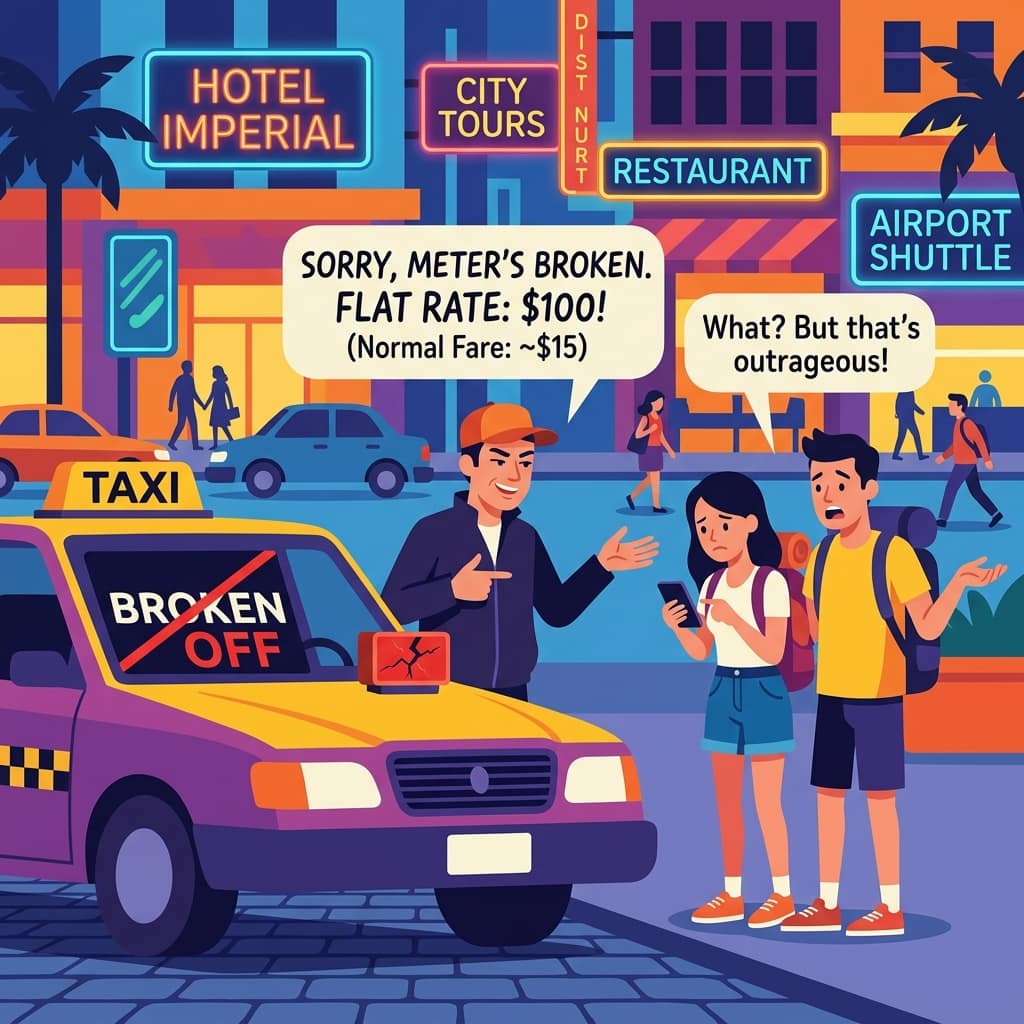
You have just stepped off a long, exhausting flight. Your eyes are heavy, your luggage feels like it is filled with bricks, and all you want is to collapse onto your hotel bed. You hail a taxi, sink into the back seat, and give the driver your destination. A few minutes into the journey, you glance at the dashboard and notice the meter is off. When you ask the driver to turn it on, they wave a hand dismissively. "Meter broken," they say. Or perhaps, "Night fare, no meter." By the time you reach your hotel, you are handed a bill that is three, four, or even ten times the normal rate. Welcome to the "Broken Meter" taxi scam—one of the oldest, most pervasive, and most frustrating tourist traps in the world.
The Anatomy of the Scam
The "Broken Meter" scam is incredibly common globally, particularly in major tourist hubs across Southeast Asia, South America, and parts of Europe. The premise is brilliantly simple for the scammer: by removing the objective measurement of the fare (the meter), they can charge whatever they think they can squeeze out of a naive tourist.
The scam typically unfolds in a few predictable stages. First, the driver will intentionally wait outside airports, train stations, or major tourist attractions—places where they know they will find tired, disoriented travelers. Once you are in the car and the vehicle is in motion, the driver "discovers" the meter is broken, or simply claims that the meter doesn't apply to the specific route, time of day, or your particular destination.
If you protest, they might pretend not to understand your language, act aggressively, or confidently tell you that this is "how it works here." Because your luggage is often locked in the trunk, and because you are in an unfamiliar city, you feel trapped. When you finally arrive at your destination, the driver demands a wildly inflated flat rate. If you refuse to pay, the situation can escalate to shouting matches, intimidation, or the driver refusing to open the trunk to give you your bags.
Fascinating Fact: In some heavily touristed cities, organized syndicates of "rogue taxis" control specific taxi ranks near major monuments, actively pushing out honest drivers who use their meters.
Why It Works (Psychological Tactics)
Scammers rely heavily on psychology, and the "Broken Meter" trick is a masterclass in exploiting vulnerability.
1. The Exhaustion Factor: Drivers prey on the fact that you are likely jet-lagged, hungry, or just overwhelmed by navigating a new city. You are far less likely to put up a fight or insist on the rules when you're desperate to check into your accommodation.
2. The Sunk Cost Trap: By the time the driver announces the meter is "broken," you are already in the moving vehicle. The mental friction of demanding they pull over, unloading your bags on the side of a busy highway, and trying to find a new cab is often too high for most tourists to endure.
3. Intimidation and Confusion: Local drivers know the currency, the language, and the streets. You do not. They use this asymmetry of information to confidently assert that their inflated price is "the standard tourist tax" or a "holiday weekend rate," leaving you questioning your own knowledge.
Important: Never put your luggage in the taxi's trunk if you can help it. Keeping your bags in the back seat with you gives you the leverage to simply step out of the car if the driver refuses to use the meter.
How to Spot the Red Flags
Preventing this scam is much easier than arguing your way out of it once the ride is over. Keep an eye out for these glaring warning signs:
- The Meter is Covered: If the meter has a towel or hat thrown over it, or if the screen is entirely blank before you even get in, this is an immediate red flag.
- "Fixed Price" Offers: If the driver leans out the window and immediately offers a flat rate without you asking, they are almost certainly overcharging you. A metered fare is almost always cheaper than a driver's quoted flat rate.
- Refusing to Start: If you sit in the car and the driver does not immediately start the meter upon driving away, the trap is being set.
- Aggressive Hustling: Drivers who aggressively approach you inside the airport terminal or train station, rather than waiting in the official taxi line, are usually rogue operators looking to scam tourists.
What to Do If You're Targeted
If you find yourself in a taxi where the driver pulls the "broken meter" excuse, you need to act quickly and calmly.
Before You Leave: Always ask, "Meter?" and point to it before you get in. If they say no, or give an excuse, close the door and find another cab. If you must negotiate a flat rate (which is standard in a few specific countries where meters aren't used), agree on the exact price and currency before getting in.
If You're Already Moving: The moment they say the meter is broken, firmly say, "No meter, no ride. Please pull over." Do not let them drive further. If they refuse to use the meter, insist on getting out.
Using Ride-Share Apps: The absolute best defense against the broken meter scam is bypassing traditional street taxis altogether. Apps like Uber, Grab, Bolt, or Cabify lock in the route and the price beforehand. Even if the driver takes a longer route, you are protected by the app's pricing algorithm.
Pro Tip: Always research the standard taxi fare from the airport to the city center before you land. Many airports have fixed-rate official taxi stands. Knowing the rough cost in advance gives you immediate leverage in any negotiation.
Frequently Asked Questions (FAQs)
Q: Are there any cities where taxis legitimately do not use meters? A: Yes, in some destinations (like certain Caribbean islands or smaller towns in Southeast Asia), taxis operate purely on negotiated flat rates. However, you should still research the standard rate beforehand and agree on the price before entering the vehicle.
Q: What should I do if the driver locks my bags in the trunk and demands an outrageous fare? A: Stay calm but firm. Hand them a fair amount (based on what you know the ride should cost or what your hotel advised). If they refuse to open the trunk, take a photo of their ID badge (usually on the dashboard) and their license plate. Mentioning that you will call the local tourist police usually resolves the standoff instantly.
Q: Is it safe to argue with a scamming taxi driver? A: It depends on the situation. Your physical safety is always worth more than a few dollars. If the driver becomes highly aggressive, or if you are in a deserted area late at night, it may be safer to pay the inflated fare and report the driver later. However, in broad daylight outside a busy hotel, firmly standing your ground is usually effective.
Q: Can my hotel help me deal with a scamming driver? A: Absolutely. If a driver is trying to extort you upon arrival at your hotel, do not pay them immediately. Walk into the hotel lobby, explain the situation to the concierge or bellhop, and ask them to intervene. Local hotel staff deal with this daily and will not tolerate drivers scamming their guests.
Get more practical guides like this
Follow the RSS feed or send Sahi.info to your WhatsApp circle so the practical guides keep moving.