Rental Car "Toll Smishing": The Hidden Cost of the Open Road
Hitting the open road in a rental car is one of the most liberating ways to explore a new destination. You control the itinerary, the music, and th...
Rental Car "Toll Smishing": The Hidden Cost of the Open Road
Hitting the open road in a rental car is one of the most liberating ways to explore a new destination. You control the itinerary, the music, and the pace. However, navigating the confusing web of electronic toll roads, especially in an unfamiliar state or country, can be incredibly stressful. You pass under a camera, see a flash, and instantly wonder, "Did I just get a ticket? How do I pay that?"
Scammers are acutely aware of this common traveler anxiety and have developed a highly targeted attack to exploit it: Rental Car Toll Smishing.
Understanding "Smishing"
"Smishing" is simply phishing conducted via SMS text messages. Instead of sending a fraudulent email, scammers send a text message directly to your phone. Because text messages feel more personal and immediate than emails, people are statistically much more likely to open them and click the links inside without thinking critically.
When you are traveling, your guard might be down, and you are already anticipating administrative messages from your airline, hotel, or rental car agency. Scammers cast a wide net, sending thousands of automated texts to numbers in tourist-heavy area codes, betting that a percentage of the recipients are currently driving a rental car and stressing about tolls.
How the Toll Smishing Scam Works
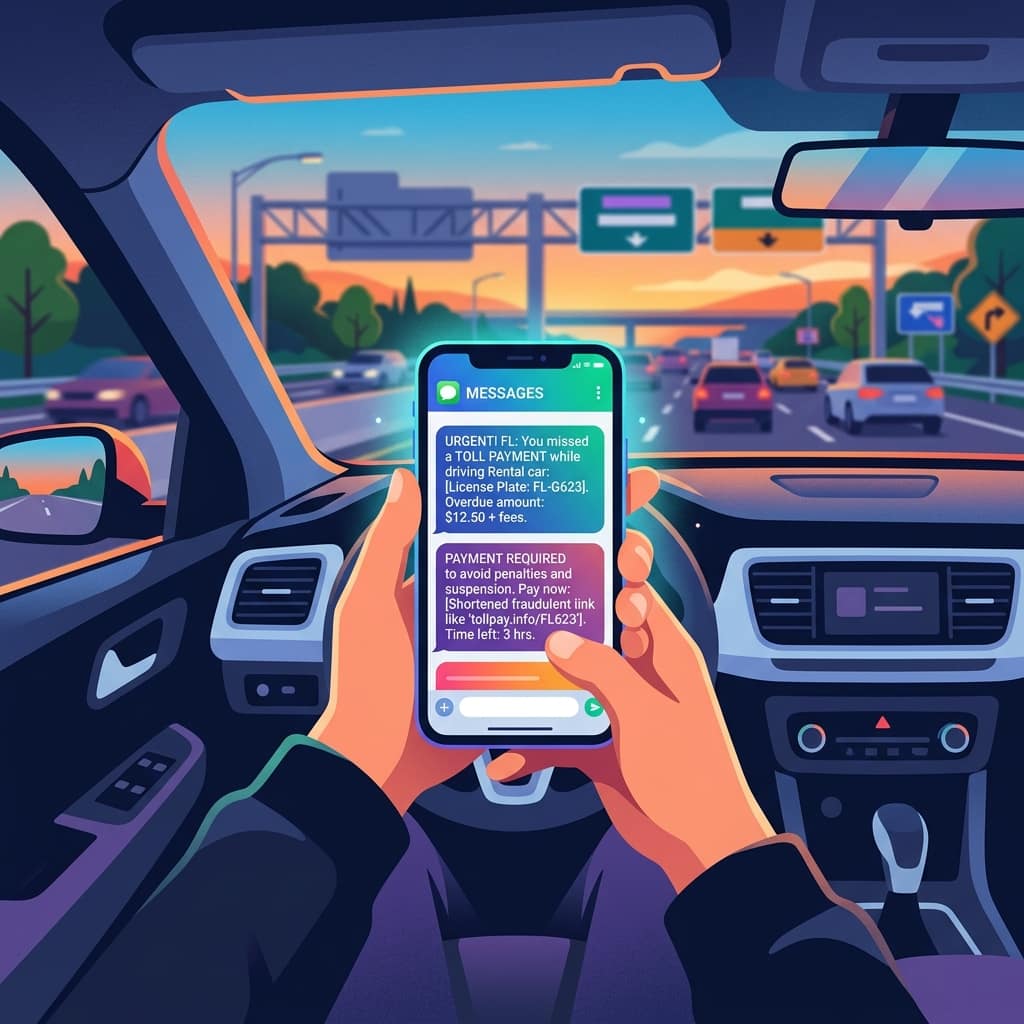
The scam begins with a seemingly official text message arriving on your phone. It usually reads something like:
"URGENT: [State] Toll Services. Our records indicate an unpaid toll violation on your recent route. To avoid a $50 late fee, please pay the outstanding $3.50 balance immediately at [Fake Link]."
The requested amount is usually quite small—just a few dollars. This is a deliberate psychological tactic. The victim thinks, "I don't remember missing a toll, but it's only three bucks, I'll just pay it to avoid the massive late fee."
Pro Tip: Legitimate toll authorities generally do not send SMS text messages demanding immediate payment for missed tolls, especially not to a number they do not have on file associated with a specific transponder account.
When you click the link in the text message, you are directed to a beautifully designed, fake website that mimics the official local toll authority (such as SunPass, E-ZPass, or FasTrak). The site prompts you to enter your credit card information to settle the small debt.
Once you hit submit, the scammers don't just take the $3.50. They now have your full credit card number, expiration date, and CVV code, which they will quickly use to make massive fraudulent purchases or sell on the dark web.
Why Rental Car Drivers are the Perfect Targets
If you are driving your own car, you probably know how your local tolls work. But when you rent a car, the rules change. Some rental agencies charge exorbitant daily fees for using their transponders, prompting many drivers to decline the service and attempt to pay the tolls manually online. This creates a state of confusion that makes the smishing text seem perfectly plausible.
Furthermore, scammers sometimes operate these campaigns near major airports. When you land and turn on your phone, your device pings local cell towers, and you might receive a localized spam text right as you are picking up your rental car.
Important: If you receive a toll violation text, look closely at the sender's number. True automated alerts usually come from shortcodes (5-6 digit numbers), not standard 10-digit phone numbers or international numbers. Furthermore, scrutinize the URL in the text; it will likely be a slight variation of the real agency's website.
How to Handle Real (and Fake) Tolls While Renting
To protect yourself from this scam and manage legitimate tolls effectively, follow these guidelines:
- Understand Your Rental Agreement: Before you drive off the lot, ask the rental agent exactly how tolls are handled. Do they have a transponder in the car? If you pass a cashless toll, will the agency bill you later, or are you responsible for going online and paying it within 48 hours?
- Never Click Links in Unsolicited Texts: If you receive a text claiming you owe a toll, do not click the link. If you genuinely suspect you missed a payment, open your web browser and manually type in the official web address of the local toll authority to check your license plate.
- Use Navigation Apps Wisely: If you want to avoid the headache entirely, set your GPS or mapping app to "Avoid Tolls." It might add a few minutes to your journey, but it guarantees peace of mind.
- Check the URL: If you do accidentally click the link, examine the website's address bar. Government toll websites will usually end in
.govor be hosted on a well-known, official state domain.
The open road should be about freedom, not fear of hidden fees. By understanding how toll smishing works and refusing to act on urgent, unsolicited text messages, you can keep your credit card secure and focus on the journey ahead.
Frequently Asked Questions (FAQs)
Q: How did the scammers know I was renting a car? A: In most cases, they don't. Scammers use automated software to blast millions of text messages to random numbers. They rely on the law of averages; a certain percentage of the people who receive the text will happen to be driving a rental car that day and fall for the trick.
Q: If I ignore the text, and it was a real toll, what happens? A: If it was a legitimate missed toll, the toll authority will eventually trace the license plate to the rental car agency. The rental agency will then pay the toll and pass the cost onto you, usually charging the credit card you have on file, often with an added administrative fee. They will notify you via formal email or mail, not a random text.
Q: I paid the $3 on the fake site. What do I do now? A: Contact your credit card company immediately. Inform them that you fell victim to a phishing scam and that your card number has been compromised. They will cancel the card and issue you a new one, preventing the scammers from making larger fraudulent charges.
Q: Can I just pay tolls with cash anymore? A: It depends on the location. While some older toll booths still accept cash, many major highways and bridges globally have shifted to completely cashless, electronic tolling systems to improve traffic flow. Always check the local infrastructure rules before your trip.
Get more practical guides like this
Follow the RSS feed or send Sahi.info to your WhatsApp circle so the practical guides keep moving.