Flight Cancellation Phishing: Don't Let Scammers Ground You
You are packing your bags, reviewing your itinerary, and feeling that pre-vacation excitement bubble up. Suddenly, your phone buzzes. It's an urgen...
Flight Cancellation Phishing: Don't Let Scammers Ground You
You are packing your bags, reviewing your itinerary, and feeling that pre-vacation excitement bubble up. Suddenly, your phone buzzes. It's an urgent text message claiming to be from your airline: "URGENT: Your flight DL409 has been canceled due to operational issues. Click here to rebook immediately or claim your refund." Panic sets in. You click the link, desperate to save your trip, and quickly enter your booking reference and credit card details to secure a new seat.
Unfortunately, your flight was never canceled, and you've just handed your sensitive information straight to a cybercriminal.
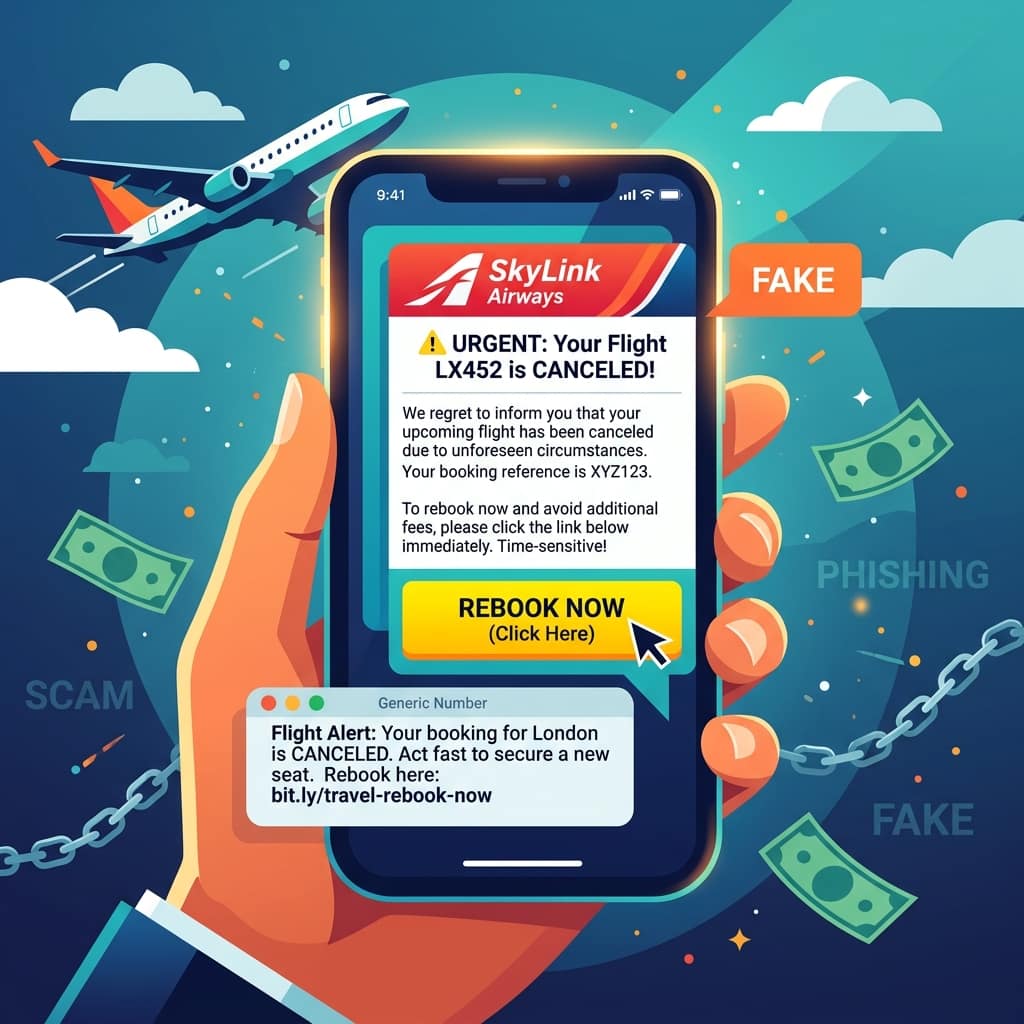
Flight cancellation phishing is a highly targeted and incredibly effective scam that preys on a traveler's worst nightmare: a ruined itinerary. By impersonating major airlines and creating a false sense of extreme urgency, scammers manipulate victims into bypassing their normal security checks. This guide will walk you through exactly how this scam operates, the major red flags to watch for, and how to verify your flight status securely.
How Flight Cancellation Phishing Works
Scammers have become astonishingly good at mimicking the exact tone, design, and urgency of real airline communications. Here is the step-by-step breakdown of how they execute this phishing attack.
1. The Lure (SMS or Email)
The scam almost always begins with an unsolicited communication, usually an SMS (text message) or an email. Scammers often time these mass messages to coincide with actual busy travel seasons, major weather events, or highly publicized airline IT outages, making their fake claims seem far more plausible.
2. The False Urgency
The core of any successful phishing attack is urgency. The message will claim that your flight is canceled, indefinitely delayed, or that your booking has an "error" that will result in cancellation if not resolved immediately. The goal is to induce panic, forcing you to react quickly rather than think critically.
Pro Tip: Cybercriminals rely on your panic. If you receive an urgent message about your flight, take a deep breath. A legitimate airline will not penalize you for taking five minutes to independently verify the information before taking action.
3. The Malicious Link
The message will always contain a link directing you to "rebook," "verify your details," or "claim a refund." This link does not go to the official airline website, but rather to a spoofed, fake website controlled by the scammers.
4. The Spoofed Website
The fake website is often a carbon copy of the real airline's site. It will feature the correct logos, colors, and fonts. However, once you enter the site, you will be prompted to enter sensitive information.
5. Data Harvesting and Financial Theft
The site will ask you to "log in" (stealing your frequent flyer account credentials), enter your booking reference (allowing them to access your real itinerary), and ultimately, input your credit card details to pay a "rebooking fee" or to "verify your identity for a refund." Once you click submit, the scammers have everything they need to steal your money and potentially hijack your actual travel plans.
The Risks: More Than Just a Rebooking Fee
Falling for a flight cancellation phishing scam has severe consequences that can compound rapidly.
Credit Card Fraud
The most immediate risk is that the scammers will max out the credit card you provided, making massive purchases or transferring funds before you realize what has happened.
Stolen Travel Miles
If you enter your frequent flyer login credentials into a spoofed site, scammers can log into your real account, drain your accumulated air miles, and book free flights for themselves or sell the miles on the dark web.
Hijacked Itineraries
By providing your booking reference (PNR) and last name, you give the scammer the keys to your actual reservation. They can log into the real airline website, cancel your actual flight for a voucher, or change the passenger details, leaving you stranded at the airport.
Important: Airlines will never ask you to pay a "rebooking fee" if they were the ones to cancel your flight. Under airline regulations in most countries, if the airline cancels, they must rebook you for free or offer a full refund.
Spotting the Red Flags
Despite how sophisticated these phishing attempts have become, they almost always leave behind subtle clues. Look out for these red flags:
- Generic Greetings: Legitimate airlines usually address you by name and include specific details like your actual flight number and destination. Phishing emails often use generic greetings like "Dear Passenger" or reference generic flight numbers.
- Suspicious Sender Addresses: Check the actual email address or phone number the message came from. If the email is from "delta-support@gmail.com" or a strange string of numbers, it is a scam.
- Slightly Altered URLs: Before clicking any link, hover your mouse over it (or long-press on mobile) to preview the URL. Scammers use "typosquatting" to create URLs that look similar to the real thing, such as "www.unlted-airlines-rebooking.com" instead of "www.united.com".
- Requests for Passwords or Payment: A real cancellation notification will direct you to log into your account through the standard app or website. It will not ask you to reply with your password or immediately demand credit card information to process a standard rebooking.
How to Verify Your Flight Status Safely
If you receive a notification that your flight is canceled, follow these steps to handle the situation securely:
1. Do Not Click the Link
Never click links or download attachments in unsolicited emails or text messages regarding your flight.
2. Use the Official App
The absolute safest way to check your flight status is to open the official airline app on your smartphone. If your flight is genuinely canceled, the app will prominently display a notification and offer official rebooking options right there.
3. Go Directly to the Website
If you don't have the app, open your web browser and manually type in the airline's official web address (e.g., www.americanairlines.com). Log into your account or use the "Manage Trip" feature with your booking reference to check the status.
4. Call Customer Service
If you are still unsure, call the airline's customer service number. Do not use the phone number provided in the suspicious email or text. Look up the official contact number on the airline's verified website or the back of your frequent flyer card.
Fascinating Fact: During major global travel disruptions, such as massive winter storms or IT system outages, cybersecurity firms report that the volume of flight cancellation phishing emails spikes by over 300% within 24 hours.
Conclusion
Flight cancellation phishing is a cruel scam that exploits the natural anxiety associated with air travel. By understanding the tactics these cybercriminals use—namely, false urgency and spoofed websites—you can protect yourself and your wallet. Remember, when it comes to travel notifications, skepticism is your best defense. Always verify independently through official channels before handing over your personal information.
Frequently Asked Questions (FAQs)
Q: I clicked the link but didn't enter any information. Am I safe? A: You are likely safe from financial theft, but clicking the link confirms to the scammer that your phone number or email address is active. You may receive more phishing attempts in the future. In rare cases, clicking a link can trigger a malware download, so it's best to run an antivirus scan on your device.
Q: Will an airline ever text me about a cancellation? A: Yes. Most major airlines offer legitimate SMS flight updates if you opt-in during booking. However, legitimate texts will usually just inform you of the status change and tell you to check the app, rather than demanding immediate payment via a suspicious link.
Q: What should I do if I entered my credit card details into a fake site? A: Call your credit card issuer immediately using the number on the back of your card. Report the fraud, freeze or cancel the card, and request a new one be issued. Then, go to the official airline website and change your frequent flyer password.
Q: How do scammers know I have a flight booked? A: Often, they don't. They send out millions of these messages randomly, knowing that statistically, a certain percentage of recipients will actually have an upcoming flight and fall for the ruse. In other cases, they may have scraped data from a third-party booking site breach.
Get more practical guides like this
Follow the RSS feed or send Sahi.info to your WhatsApp circle so the practical guides keep moving.