Fake Ride-Share Drivers: How to Spot the Scam Before Getting in the Car
Stepping out of the arrivals terminal after a long, exhausting international flight, all you want is to get to your hotel and collapse onto a soft ...
Fake Ride-Share Drivers: How to Spot the Scam Before Getting in the Car
Stepping out of the arrivals terminal after a long, exhausting international flight, all you want is to get to your hotel and collapse onto a soft bed. You pull out your phone, open your ride-share app, and request an Uber or Lyft. Within moments, a car pulls up, and the driver rolls down the window. "Are you waiting for a ride?" they ask. Exhausted, you nod, throw your bags in the trunk, and slide into the backseat.
It isn't until you are halfway down the highway that you realize the ride-share app on your phone is still showing your actual driver is five minutes away. You haven't gotten into an Uber—you've been picked up by a "Fake Ride-Share Driver," and you are about to be extorted for a massive, off-app cash fare.
The Mechanics of the Fake Ride-Share Hustle
The Fake Ride-Share Driver scam preys on traveler fatigue, airport chaos, and our inherent trust in the convenience of modern apps. Scammers know that after a 12-hour flight, tourists are rarely paying close attention to license plates or driver profiles.
The Airport Ambush
This scam almost exclusively occurs at busy transportation hubs—airports, major train stations, and large concert venues. Unlicensed drivers, or sometimes legitimate taxi drivers operating illegally off the meter, will circle the designated ride-share pickup zones. They look for people staring at their phones, clearly tracking an approaching vehicle.
The Vague Approach
The scammer will pull up to the curb, roll down the window, and use a generic prompt. They rarely ask, "Are you John?" Instead, they will ask, "Uber?" or "Are you waiting for your ride?" If you say yes, they will enthusiastically tell you to get in. Some bolder scammers will even place a fake, glowing Uber or Lyft sticker in their windshield to look official.
Pro Tip: Never answer "Yes" to a driver who asks, "Are you waiting for an Uber?" Instead, respond with a question: "Who are you here to pick up?" If they cannot provide your name, do not get in the car.
The Extortion
Once your luggage is in the trunk and you are on the highway, the trap is sprung. The driver will casually mention that the "app is down" or that they operate on a cash-only basis for airport runs. When you arrive at your destination, they will demand a fare that is often three to five times higher than the quoted app price. Because they have your luggage held hostage in the trunk, and because you are in an unfamiliar city, most tourists simply pay out of fear and intimidation.
Where Are You Most Likely to Encounter This?
While ride-share safety features have improved, this scam is still highly prevalent in cities where ride-share regulations are loosely enforced or where taxi cartels aggressively compete with apps.
- Major US Airports: Airports in cities like New York (JFK), Miami, and Las Vegas frequently deal with unlicensed "gypsy cabs" posing as ride-shares.
- Latin America: In cities like Bogota, Mexico City, and Sao Paulo, getting into the wrong car can lead to much worse than an inflated fare, including "express kidnappings" where victims are forced to withdraw money from ATMs.
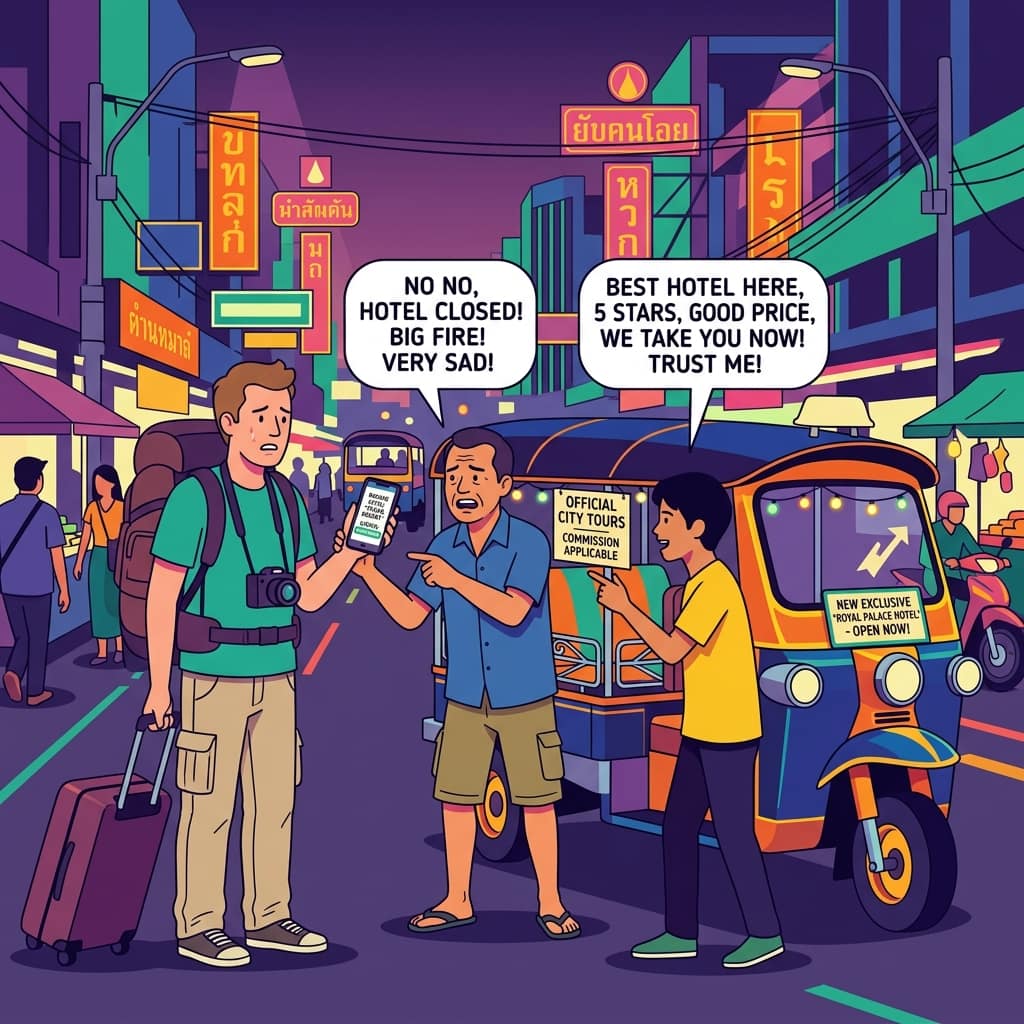
- Southeast Asia: Scammers outside airports in Bali, Bangkok, and Manila often pose as Grab drivers, intercepting tourists before the real driver arrives.
Spotting the Red Flags
Protecting yourself requires taking three extra seconds to verify your ride before touching the door handle. Look for these warning signs:
- They Don't Know Your Name: A legitimate ride-share driver has your first name on their screen. A scammer will try to guess or ask you for your name first.
- Mismatched License Plates: This is the ultimate giveaway. If the license plate on the car does not match the one displayed in your app, do not get in.
- Wrong Car Make/Model: If the app says a silver Honda Civic is picking you up, and a black Toyota SUV pulls up claiming to be your ride, step away.
- Asking for Cash Upfront: Ride-share apps handle all payments digitally. If a driver asks for cash, a toll fee in cash, or claims the credit card system is down, it is a scam.
Important: In many countries, it is entirely illegal for ride-share drivers to accept street hails or pick up passengers who have not formally requested a ride through the application.
Best Practices for Ride-Share Safety
To ensure you never fall victim to a fake driver, build these simple checks into your travel routine:
The "What's My Name?" Rule
Make it an unbreakable rule to verify names. Ask the driver, "Who are you picking up?" Additionally, ask them, "What is your name?" and compare it to the driver profile on your phone.
Check the License Plate
Always walk to the back or front of the car and match the license plate number to your app. Scammers cannot fake a license plate to match the random driver assigned to you.
Utilize App Safety Features
Both Uber and Lyft offer a feature where you are provided a 4-digit PIN. The driver cannot start the trip on their app until they enter your PIN. Turning this feature on makes it virtually impossible for a fake driver to trick you into a ride.
Keep Your Luggage Close
If you have a small suitcase or backpack, keep it with you in the backseat rather than putting it in the trunk. This gives you the leverage to simply step out of the car at a red light if you realize you are in the wrong vehicle or feel unsafe, without leaving your belongings behind.
What to Do If You're Caught in the Scam
If you realize mid-ride that you are in a fake ride-share, prioritize your physical safety.
- Demand to Be Let Out: If you are in a safe, public, well-lit area, firmly tell the driver you want to get out immediately.
- Use Emergency Features: If the driver refuses to pull over or becomes aggressive, call local emergency services immediately. Most ride-share apps have an in-app 911 button, though if you are in a fake ride-share, you will need to dial directly from your phone's keypad.
- Do Not Pay Exorbitant Demands: If you arrive at your hotel and they demand $150 for a $30 ride, do not hand over the cash. Walk into your hotel lobby and ask the front desk staff or security for assistance. Scammers will usually flee rather than deal with hotel security or police.
Frequently Asked Questions (FAQs)
Q: Can I get my money back from Uber or Lyft if I was scammed by a fake driver? A: No. Because the ride took place entirely outside of their ecosystem and with an unaffiliated driver, the ride-share companies have no record of the transaction and cannot issue a refund. You will have to report the theft to local police.
Q: Why don't police stop these fake drivers at the airport? A: Many major airports have sting operations, but it is difficult to police. The scammers look just like regular citizens picking up friends or family. Until money changes hands, it is hard for police to prove they are operating as illegal taxis.
Q: Is it safer to just take a traditional airport taxi? A: Airport taxis from official, dispatched taxi ranks are very safe. However, never accept a ride from someone soliciting "Taxi! Taxi!" inside the arrivals terminal. Official drivers stay with their vehicles at the designated rank.
Q: What if the driver says they are using a rental car because their main car broke down? A: Do not accept this excuse. Ride-share platforms require drivers to register the exact vehicle they are driving. If the car does not match the app, do not get in, even if they show you their driver profile on their phone.
Q: How does the PIN feature work? A: In your app settings, you can toggle on "Verify Your Ride." When requested, the app generates a unique 4-digit PIN. You must verbally give this PIN to the driver, who types it into their app. The trip cannot start until the correct PIN is entered, guaranteeing you are in the correct car.
Get more practical guides like this
Follow the RSS feed or send Sahi.info to your WhatsApp circle so the practical guides keep moving.