Currency Exchange Calculator Tricks: How to Avoid Short-Changing Scammers
Arriving in a new country brings the immediate need for local currency. Whether you need cash for a taxi, a quick snack, or a tip for the bellhop, ...
Currency Exchange Calculator Tricks: How to Avoid Short-Changing Scammers
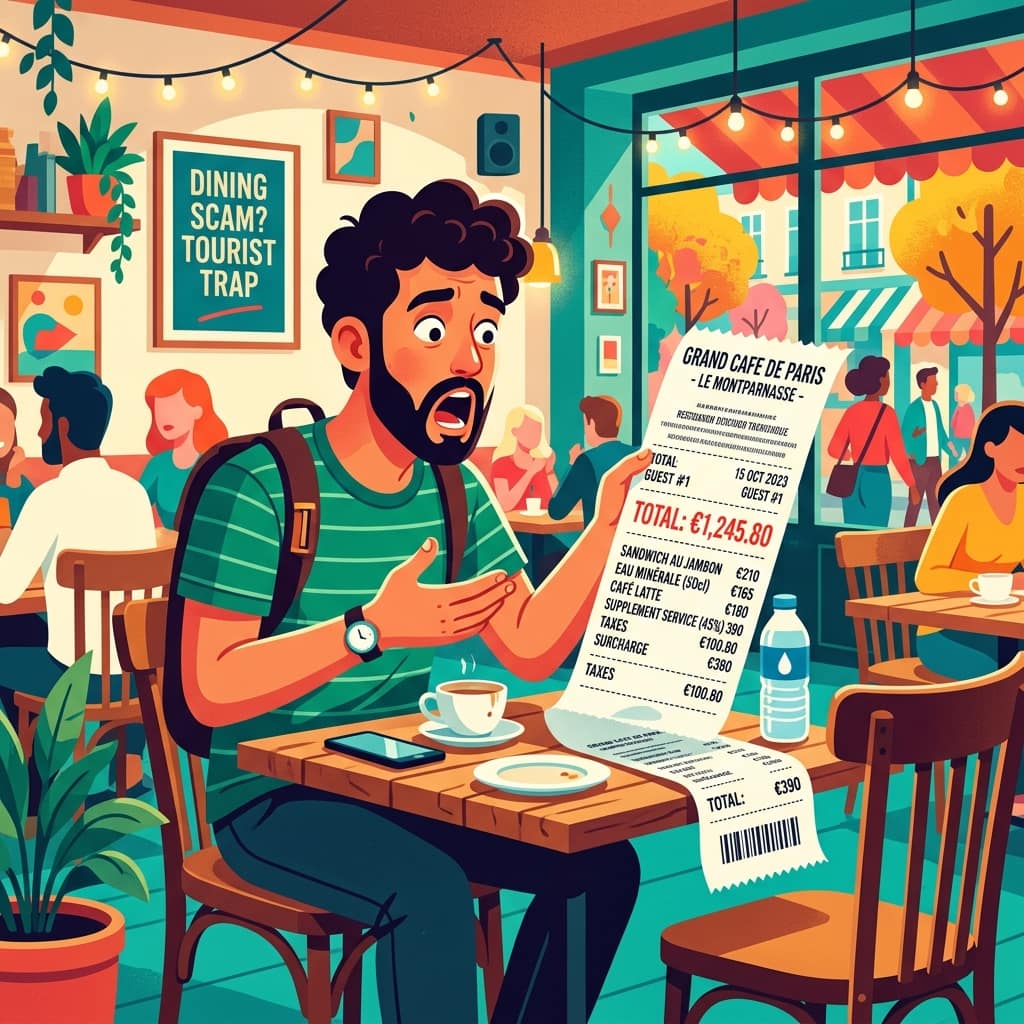
Arriving in a new country brings the immediate need for local currency. Whether you need cash for a taxi, a quick snack, or a tip for the bellhop, finding a place to exchange your money is usually priority number one. You spot a brightly lit currency exchange booth (a bureau de change or cambio) offering "0% Commission" and seemingly great rates. You hand over a crisp $100 bill, the cashier punches some numbers into a calculator, shows you the screen, and hands you a stack of local bills. You walk away feeling accomplished—until you count the money later and realize you're missing a significant chunk of cash.
You've just been a victim of Currency Exchange Calculator Tricks.
This scam is a masterclass in sleight of hand and psychological manipulation. By confusing you with rapid movements, rigged devices, and complex math, crooked cashiers skim money off the top of your transaction right in front of your eyes. In this guide, we will break down exactly how these exchange booth scammers operate, the red flags to watch for, and the safest ways to get local currency on your travels.
The Anatomy of the Exchange Scam
Currency exchange scams rely on the fact that tourists are usually tired from travel, unfamiliar with the look and feel of the local banknotes, and mentally struggling to calculate the exchange rate on the fly. Scammers use this confusion to their advantage through several distinct techniques.
The Rigged Calculator
The most blatant version of this scam involves a physically altered calculator. The cashier takes your money, types in the amount, and multiplies it by the exchange rate. They then turn the calculator around to show you the total you should receive. However, the calculator has been tampered with or programmed to shave off 10% to 20% from the final sum. Because the number on the screen looks vaguely correct—and because people inherently trust calculators—the tourist accepts the amount without doing the math themselves.
Pro Tip: Some scammers don't even use a rigged calculator; they simply hit the "minus" or "clear" button and quickly type in a lower number before spinning the calculator around to show you.
The Sleight of Hand (The "Fold")
This technique requires incredible dexterity. The cashier accurately calculates the exchange and counts the local currency out loud, placing the bills on the counter one by one. It seems perfect. But as they gather the stack of bills to hand it to you (or place it in an envelope), they subtly fold one or two high-denomination bills back into their palm, dropping them behind the counter. You walk away holding a stack of money that you just saw counted correctly, completely unaware that the bottom bills vanished in a split second.
The Slow Count / Confusion Tactic
If you try to count the money yourself at the window, the cashier will deliberately confuse you. They might hand you the money in a chaotic mix of small and large denominations. If they see you recounting, they will suddenly claim they made a mistake, snatch the money back, recount it rapidly, and hand it back—using sleight of hand during the second exchange to steal a bill. The goal is to frustrate you into giving up and walking away before verifying the amount.
The Hidden Fees
While not a physical trick, many booths advertise "No Commission" in massive letters, but hide a predatory "Service Fee" or a terrible "Buying Rate" in microscopic print. The calculator might show an accurate calculation based on their absurdly bad internal rate, effectively scamming you legally.
Spotting the Red Flags
Protecting your travel funds starts with choosing the right place to exchange money. Here are the warning signs of a predatory exchange booth.
1. "Too Good to Be True" Rates
If an independent booth is offering an exchange rate that is significantly better than the official bank rate, it is almost certainly a trap. They use the amazing rate as bait, fully intending to make up the difference through sleight of hand or hidden fees.
2. Chaotic or Cluttered Counters
Scammers love a messy workspace. If the counter is cluttered with papers, promotional signs, or a high lip that obscures your view of the cashier's hands, be very careful. This environment is designed to hide the "fold" trick.
3. The Use of Handheld Calculators
Professional, legitimate exchange bureaus use integrated computer systems that print an official, itemized receipt detailing the exact rate, the amount tendered, and the amount given. If a cashier is relying entirely on a cheap, handheld plastic calculator, consider it a massive red flag.
4. Refusal to Give a Receipt
If you ask for a receipt and the cashier says the printer is broken, or hands you a handwritten scrap of paper, cancel the transaction immediately.
How to Protect Your Money
The best way to avoid currency exchange scams is to control the transaction from start to finish.
1. Do Your Own Math First
Before you even approach an exchange window, pull out your smartphone. Use a trusted currency conversion app (like XE or the built-in Google converter) to check the real-time official exchange rate. Calculate exactly how much local currency you should receive for your money. If the cashier’s calculator shows a drastically different number, walk away.
Important: Do not rely on the cashier to tell you the rate. Always know what your money is worth before handing it over.
2. Count it Yourself, at the Window
Never accept a stack of cash or an envelope and walk away. Stand directly in front of the window and recount every single bill yourself, slowly and deliberately. If there is a line behind you, ignore it. It is your money.
3. Don't Let Them Touch it Again
If you count the money and find it is short, hold onto the cash you were given and point out the discrepancy. Do not hand the entire stack back to the cashier. If you hand it back, they will use sleight of hand to confuse the pile further. Demand the missing amount.
4. Use Bank ATMs
The safest and most cost-effective way to get local currency is to skip the exchange booths entirely. Use your debit card at an official, bank-operated ATM (preferably located inside a bank branch). While you may pay a small international transaction fee to your bank, you will receive the exact, official exchange rate without the risk of sleight-of-hand theft.
What to Do If You Get Scammed
If you walk away and realize you've been shortchanged, your options are limited, but you should still take action.
- Return Immediately: Go straight back to the booth. Often, if a tourist confidently returns and loudly accuses them of short-changing, the scammer will pretend it was an "honest mistake" and hand over the missing bills to avoid drawing a crowd or police attention.
- Do Not Become Violent: Scammers can be aggressive, and causing a physical altercation in a foreign country can land you in jail. Be firm, loud, and assertive, but do not cross the line into physical threats.
- Threaten to Call the Police: Mentioning the tourist police is often enough to make a scammer fold. Take a photo of the booth and the cashier (if safe to do so) as leverage.
- Accept the Loss and Warn Others: If the cashier aggressively denies it and you cannot get your money back, file a report with the local tourist police. Even if you don't recover your funds, your report helps authorities track problem areas. Share your experience on travel forums to warn future travelers.
Frequently Asked Questions (FAQs)
Q: Are airport currency exchanges safe? A: Airport exchange booths are generally safe from sleight-of-hand scams because they are heavily regulated corporate entities (like Travelex). However, they are a "scam" in a different way: they offer some of the worst exchange rates and highest hidden fees in the world due to their captive audience. Avoid exchanging large amounts at the airport.
Q: Should I exchange money before I leave my home country? A: It's a good idea to order a small amount of local currency (around $100 equivalent) from your local bank a week before your trip. This ensures you have cash for immediate needs upon arrival (like a taxi) without having to rely on predatory airport or street exchanges.
Q: What is dynamic currency conversion (DCC)? A: When paying with a credit card abroad, a card machine may ask if you want to pay in the local currency or your home currency. Always choose the local currency. If you choose your home currency, the merchant’s machine applies a terrible exchange rate, essentially legally skimming money from you.
Q: Can I dispute a currency exchange transaction with my credit card company? A: If you used a credit card to buy currency at a booth and were shortchanged, you can try to issue a chargeback for fraud. However, it is very difficult to prove you were shortchanged via sleight of hand after you have walked away from the window.
Get more practical guides like this
Follow the RSS feed or send Sahi.info to your WhatsApp circle so the practical guides keep moving.