AI Voice Cloning Extortion: When Your Loved One's Voice is a Trap
Imagine the scenario: your phone rings late at night while you are traveling abroad, or perhaps you are at home and the call is from a family membe...
AI Voice Cloning Extortion: When Your Loved One's Voice is a Trap
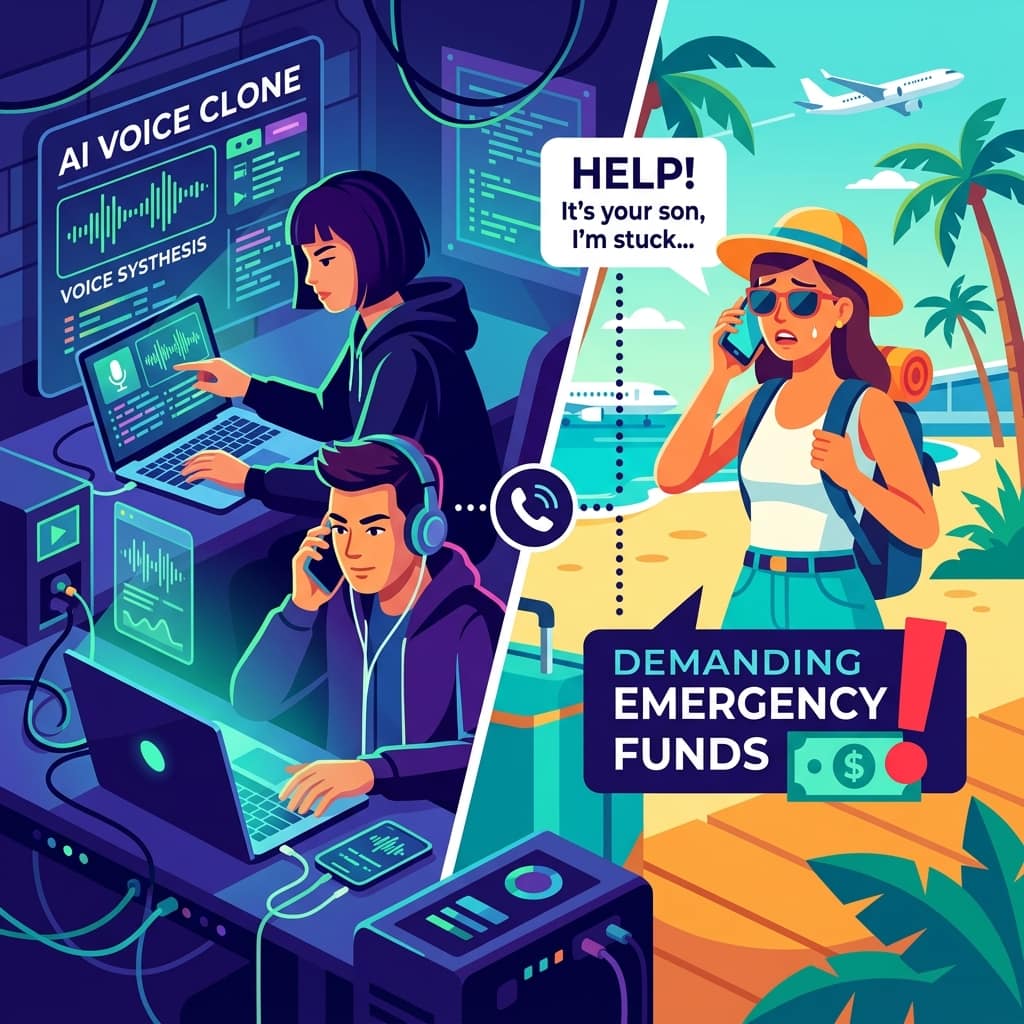
Imagine the scenario: your phone rings late at night while you are traveling abroad, or perhaps you are at home and the call is from a family member who is currently on vacation. You answer, and you hear the unmistakable, frantic voice of your loved one. They are crying, claiming they’ve been in a terrible car accident, wrongly arrested, or stranded without their passport. They desperately need you to wire money immediately to pay for bail, hospital bills, or a lawyer.
In a state of pure panic, you do exactly what they ask. But the horrifying truth is that your loved one is perfectly safe, fast asleep in their hotel room. The voice on the phone was a highly sophisticated, AI-generated clone.
The Terrifying Reality of Audio Deepfakes
The AI voice cloning extortion scam is one of the most psychologically manipulative and emotionally devastating frauds in existence today. Just a few years ago, creating a convincing audio deepfake required hours of clean, studio-quality audio recordings and expensive computing power. Today, incredibly powerful AI software is available to anyone with an internet connection, often for free.
Scammers only need a short audio sample—sometimes as little as three to five seconds—to accurately clone a person's voice. This software captures the unique pitch, cadence, and tonal inflections of the target. Once the voice model is trained, the scammer can type whatever script they want into a text-to-speech generator, and the AI will output the words in the exact voice of the victim.
How Scammers Get Your Voice and Target Your Family
You might wonder how a scammer across the globe gets a recording of your voice in the first place. The answer lies in our highly connected digital lives:
- Social Media Videos: TikTok, Instagram Reels, YouTube, and Facebook are goldmines for scammers. If your profile is public, a scammer can easily rip the audio from a video where you are speaking.
- Voicemail Greetings: Sometimes, scammers will call a target simply to record their customized voicemail greeting.
- Answering Unknown Calls: If you answer a spam call and say a few words ("Hello? Who is this? I can't hear you"), the scammer on the other end might just be recording your voice to use later.
Once they have the voice cloned, scammers scour social media to map out family connections. They look for posts indicating that you are traveling. When they know you are far from home, in a different time zone, and hard to reach, they strike by calling your parents, grandparents, or spouse.
Pro Tip: If you receive a frantic call from a loved one asking for emergency cash, take a deep breath and tell them you need to hang up and call them right back. Often, calling the person's actual phone number will reveal that they are perfectly fine.
Red Flags of a Voice Cloning Scam
Because the voice sounds identical, it is incredibly difficult to rely on your ears to spot the fraud. Instead, you must listen to the context and demands of the call:
- Extreme Urgency: The caller will insist that the money must be sent immediately, claiming that a delay will result in severe injury or extended jail time. They do this to prevent you from thinking critically or verifying their story.
- Secrecy Demands: The "loved one" or an "authority figure" (who often takes the phone during the scam) will demand that you do not tell anyone else in the family or contact the real police, claiming there is a "gag order."
- Untraceable Payment Methods: The most glaring red flag is how they ask for the money. They will almost always demand wire transfers (like Western Union), cryptocurrency, or gift cards. Legitimate hospitals, bail bondsmen, or embassies do not operate this way.
Important: Establish a "safe word" with your close family members. If anyone calls claiming to be in trouble and needing money, ask them for the family safe word. A cloned voice controlled by a scammer won't know it.
Defending Against the Deepfake
Protecting yourself and your family requires a proactive approach to digital privacy:
- Lock Down Social Media: Make your social media profiles private so strangers cannot easily view your videos or map out your family connections. Be mindful of what you post publicly.
- Verify Independently: If you receive a distress call, try to reach the person through alternative methods. Send them a WhatsApp message, call their hotel directly, or contact the friends they are traveling with.
- Screen Your Calls: Let unknown numbers go to voicemail. The less you speak to unknown callers, the less raw audio material you provide to potential scammers.
The technology behind AI voice cloning is advancing rapidly, making these scams harder to detect by ear alone. By understanding the mechanics of the scam and establishing strict verification habits within your family, you can ensure that this terrifying digital illusion doesn't cost you your savings.
Frequently Asked Questions (FAQs)
Q: Can AI replicate the emotion in a voice, like crying or panic? A: Yes. Modern AI voice generators allow the user to adjust the emotional tone of the output. Scammers can add artificial background noise, static, and synthetic crying to make the situation sound chaotic and mask any slight imperfections in the cloned voice.
Q: What should I do if I sent money to a voice cloning scammer? A: Contact your bank or the wire transfer company immediately. While wire transfers and crypto are very difficult to reverse, acting within the first few hours gives you a slight chance of stopping the transaction. You should also file a report with your local cybercrime authorities.
Q: Are older people the only ones targeted by this scam? A: While scammers often target grandparents because they are perceived to be more willing to send money and less tech-savvy, anyone can be a victim. The emotional shock of hearing a spouse or child in danger can cause even the most cynical person to panic.
Q: Is it illegal to clone someone's voice? A: The legality of voice cloning itself is complex and varies by jurisdiction, but using a cloned voice to extort money or commit fraud is definitively a severe crime worldwide.
Get more practical guides like this
Follow the RSS feed or send Sahi.info to your WhatsApp circle so the practical guides keep moving.