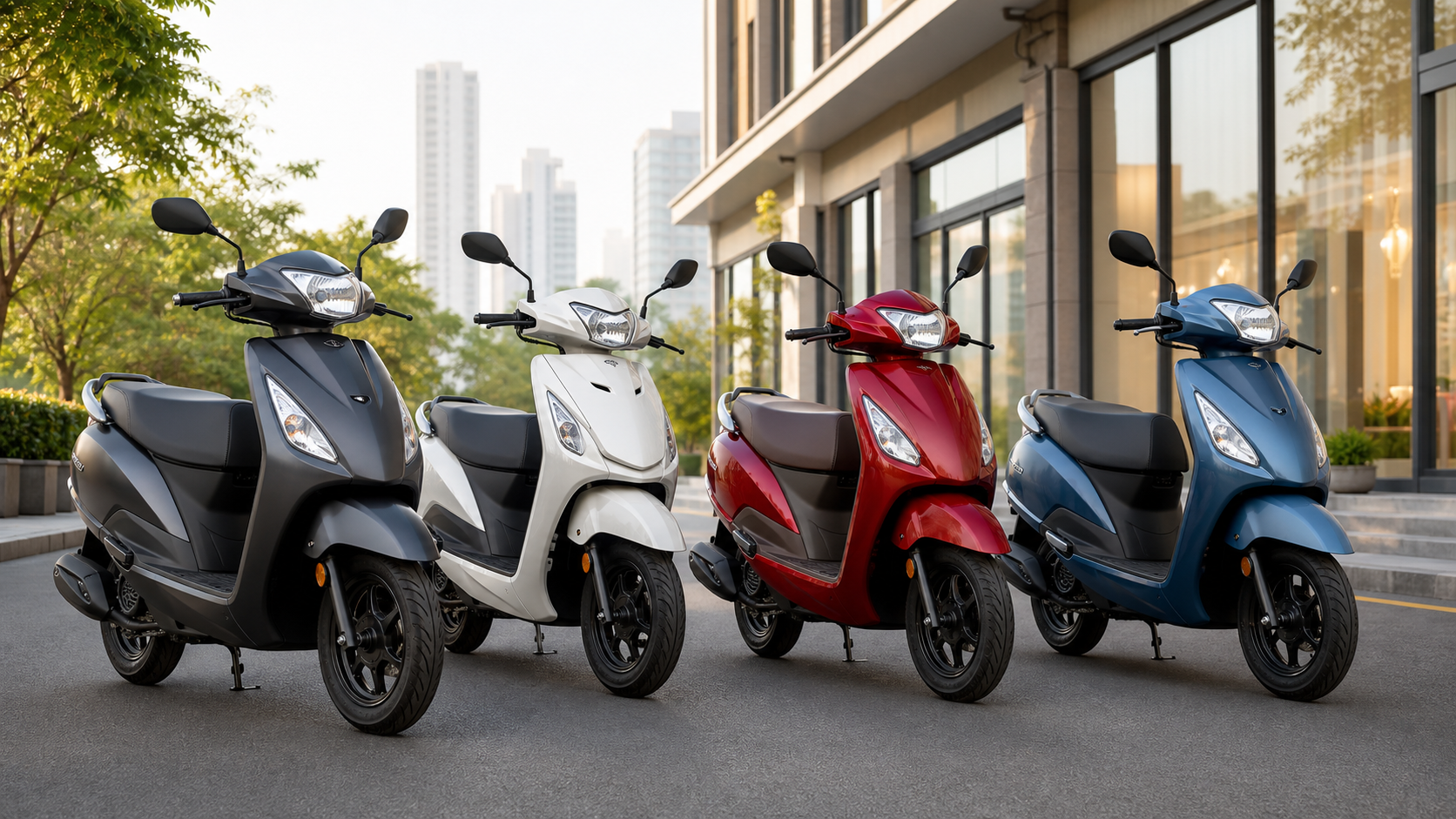
Electric Two-Wheelers in 2026: Ather EL01, Ultraviolette Tesseract and the Year Petrol Got Optional
With 38 electric scooters and over 70 electric bikes queued for India — including the Ather EL01 and the triple-battery Ultraviolette Tesseract — here is a grounded guide to switching from petrol in 2026.
Electric Two-Wheelers in 2026: Ather EL01, Ultraviolette Tesseract and the Year Petrol Got Optional
India's electric two-wheeler market has stopped being a novelty aisle. Listings now track 38 upcoming electric scooters and more than 70 electric bikes, and the headline launches read like a proper industry: Ather's family-focused EL01 expected in mid-2026, the Ultraviolette Tesseract with three battery options (3.5, 5 and 6 kWh for claimed ranges of 162, 220 and 261 km), and Yamaha's Aerox E marking a big-brand entry.
The trend behind the noise is premiumisation — longer ranges, bigger batteries and real motorcycles, not just scooters. That changes the buying question. In 2023 the question was "do electric scooters work?" In 2026 it is "which running-cost, charging and service combination works for my exact commute?"
Quick verdict: If you ride under 40 km a day and can charge at home, a mainstream electric scooter already beats petrol on total cost within three years. If you cannot charge where you park, stay on petrol or CNG — no spec sheet fixes a missing plug point.
The 2026 Launches Worth Tracking
| Model (reported) | Type | Why it matters |
|---|---|---|
| Ather EL01 | Family e-scooter, mid-2026 | Ather software polish at a family price point |
| Ultraviolette Tesseract | Premium e-scooter, 3.5/5/6 kWh | Claimed 162–261 km — tourer-grade range in a scooter |
| Yamaha Aerox E | Sporty e-scooter | A global big brand finally committing to Indian EVs |
| Simple family scooter | Family e-scooter | More competition in the practical segment |
| Ultraviolette Shockwave | Electric motorcycle | Real motorcycles, not scooter conversions |
The Only Maths That Matters: Cost Per Kilometre
A typical electric scooter consumes roughly 3 kWh per 100 km. At home-meter rates of ₹7–8 per unit, that is about ₹0.25 per kilometre, against ₹2–2.5 per kilometre for a 45–50 km/l petrol scooter at current fuel prices. For a 30 km daily commute, the fuel saving alone is roughly ₹1,500–2,000 a month.
Balance that against the premium: electric models still cost more upfront, battery warranties typically run 3–5 years or a fixed km limit, and an out-of-warranty battery is the single biggest ownership risk. The switch pays when you ride enough kilometres to bank the fuel savings before the warranty clock runs out.
Sahi Tip: Ask the dealer for the battery warranty's exact degradation clause — the capacity percentage at which a claim is honoured — and get it on the invoice or brochure, not verbally. This one line decides your five-year cost.
Checks Petrol Buyers Never Had to Make
- Charging reality: confirm your building allows a charger at your parking spot, and who pays for the wiring — societies vary wildly.
- Range honesty: claimed range is IDC (test-cycle); real-world is typically 70–80% of it, less with a pillion and monsoon traffic.
- Service network: newer EV brands can have thin networks outside metros; check the nearest service point before, not after.
- Software dependence: app-locked features and OTA updates are great until a server issue immobilises features — ask what works offline.
- Monsoon behaviour: e-scooters are IP-rated and fine in rain, but check ground clearance and wading depth if your route floods.
Who Should Still Buy Petrol in 2026
Riders doing frequent 100 km-plus highway days, buyers without any home or office charging access, and anyone in a town where the nearest EV service centre is a bus ride away — petrol remains the rational pick for all three, and will for a few more years.
For everyone else, 2026 is the year the default flipped. With Yamaha, Suzuki, Bajaj, TVS and Ather all shipping serious models, buying petrol now needs a reason, in the same way buying electric needed one in 2022.
Sources and update note
Facts and announced details were checked on July 8, 2026. Prices, launch dates, road conditions and product availability can change; verify the final figure before paying or travelling.
FAQ
Which electric scooter has the longest range in 2026?
Among reported launches, the Ultraviolette Tesseract's top 6 kWh variant claims 261 km. Remember claimed figures are testcycle numbers — expect roughly threequarters of that in mixed realworld riding.
Is an electric scooter safe to charge overnight at home?
Yes, with the supplied charger on a properly earthed dedicated socket. Avoid loose multiplugs and extension boards, and get the socket installed by an electrician — most charging incidents trace back to bad house wiring, not the scooter.
How long do electric scooter batteries last?
Typical warranties run 3–5 years or a fixed kilometre cap, and packs usually retain usable capacity beyond that with sensible charging. Buying decisions should weight the written warranty terms over any lifespan claim.
Get more practical guides like this
Follow the RSS feed or send Sahi.info to your WhatsApp circle so the practical guides keep moving.