The Architectural Marvels of Khajuraho: Poetry Carved in Stone
Journey to the heart of India to discover the Khajuraho temples, a breathtaking UNESCO World Heritage site where medieval sandstone architecture reaches its magnificent pinnacle.
Whispers in Sandstone: Waking Up With the Gods of Khajuraho
The air in Madhya Pradesh carries a distinct, earthy chill at 6:00 AM in November. Standing before the gates of the Western Group of Temples, I watched the first rays of the morning sun spill over the horizon. The golden light hit the towering shikhara of the Kandariya Mahadeva Temple, and suddenly, the pale sandstone ignited into a warm, honeyed glow. Shadows stretched and retreated, making the thousands of stone figures seem to stir from a millennium of slumber. It felt less like visiting an archaeological site and more like walking into a frozen theater of human existence.
Beyond the Obvious
Most people come to Khajuraho expecting scandal. The town’s reputation precedes it, inextricably linked to the intricate, explicit carvings that decorate its temple walls. But as I walked closer, craning my neck to take in the 800 individual sculptures adorning just one temple, the reality shifted.
Fascinating Fact: Erotic art makes up less than ten percent of the carvings in Khajuraho! The rest is a sprawling, stone-carved encyclopedia of 10th-century life under the Chandela dynasty.
I saw warriors marching into battle, musicians lost in the rhythm of their stone instruments, women applying kohl to their eyes, and mythical beasts standing guard. Every inch of the facade pulsed with movement.
The Quiet Side of the Village
As the morning matured and tour buses began dropping off eager crowds at the main gates, I slipped away to the lesser-visited Eastern and Southern groups. Here, the landscape changes. The manicured lawns of the Western complex give way to dusty village paths lined with mustard fields.
My unexpected discovery was the Chaturbhuj Temple, the only major temple here devoid of erotic sculptures, standing solitary against the vast sky. Inside, a massive, three-meter-tall idol of Lord Vishnu commands the dimly lit sanctum. Sitting on the cool stone steps outside, listening to the distant ring of bicycle bells and the rustle of peepal leaves, the immense spiritual weight of Khajuraho finally sank in. It’s a place of devotion, not just decoration.
Flavors of the Heartland
Wandering builds an appetite, and the narrow lanes outside the temple complex offer comforting local remedies. I pulled up a plastic chair at a roadside eatery where a vendor was busy ladling steaming dal over crushed bafla—wheat dough balls boiled and then roasted over dung cakes. Paired with a dollop of ghee, fiery garlic chutney, and a clay cup of strong cardamom chai, it was a meal that tasted deeply of the central Indian soil.
Pro Tip: Skip the expensive tourist trap restaurants near the main gates. A simple plate of dal bafla from a roadside vendor gives you a much more authentic (and delicious) taste of Madhya Pradesh.
The locals here are warm and used to wide-eyed outsiders. A local shopkeeper, sorting through brass trinkets, handed me a small cup of water and said with a proud smile, "The stones speak if you know how to listen."
Navigating Your Own Temple Trail
To hear those stones clearly, you need to time your visit right. The sweet spot is between November and February when the weather is forgiving enough for all-day explorations. Summer here is brutal, and the monsoon, while beautiful, makes the stone steps treacherously slick.
Getting here is surprisingly easy. Khajuraho has its own small airport with flights connecting from Delhi and Varanasi, as well as a well-connected railway station. Once you arrive, the town is compact. You can rent a bicycle to hop between the temple groups, which is both budget-friendly and incredibly charming.
Important: Despite the liberal nature of the carvings, Khajuraho remains a traditional rural Indian town. Dressing modestly—covering shoulders and knees—shows respect for the active temples and the local community.
A mid-range budget of about ₹3,000 to ₹5,000 a day covers a comfortable boutique hotel or homestay, hearty meals, and entry fees. While accommodations span from luxury resorts to backpacker hostels, staying near the Western Group means you can easily walk to the evening light and sound show.
It is also highly recommended to hire an ASI (Archaeological Survey of India) approved guide; they keep the touts away and bring the dizzying array of sculptures to life with historical accuracy rather than fabricated myths.
The Final Light
By late afternoon, I found myself back where I started, watching the sun dip below the horizon from the edge of the Western complex. The sandstone cooled, returning to its pale, quiet state. The dancers, warriors, and gods faded back into the twilight, patiently waiting for another dawn. The genius of the Chandela architects wasn't just in their mastery of stone, but in their understanding of light and shadow—creating a monument to life that, a thousand years later, still feels remarkably alive.
Frequently Asked Questions (FAQs)
What is the best time to visit Khajuraho?
The best time to visit is between November and February. The weather is cool and pleasant, making it perfect for exploring the temples outdoors.
Do I need a guide for the temples?
Yes, hiring an ASI-approved guide is highly recommended. They provide historically accurate context, help you spot hidden details, and keep you away from touts.
How many days are enough for Khajuraho?
Two days are usually sufficient to explore the Western, Eastern, and Southern groups of temples at a relaxed pace, along with the evening sound and light show.
Photos
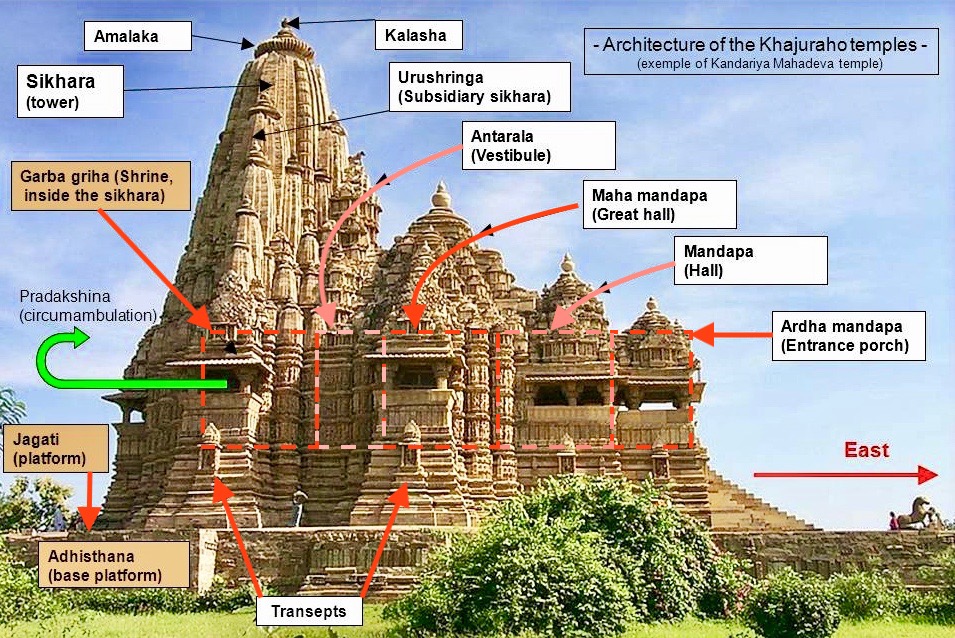
Architecture of the Khajuraho temples
Photo by Tangopaso on Unsplash
Homosexuality in Khajuraho sculpture
Photo by Dey.sandip on Unsplash
Clothed statues of the Buddha in the ruined Khmer Hindu temple of Wat Phou, Champasak, Laos
Photo by Basile Morin on Unsplash
Three quarter view of the ruined Khmer Hindu temple of Wat Phou with blue sky in Champasak Laos
Photo by Basile Morin on UnsplashFAQ
What is the best time to visit Khajuraho?
The best time to visit is between November and February. The weather is cool and pleasant, making it perfect for exploring the temples outdoors.
Do I need a guide for the temples?
Yes, hiring an ASIapproved guide is highly recommended. They provide historically accurate context, help you spot hidden details, and keep you away from touts.
How many days are enough for Khajuraho?
Two days are usually sufficient to explore the Western, Eastern, and Southern groups of temples at a relaxed pace, along with the evening sound and light show.
Get more practical guides like this
Follow the RSS feed or send Sahi.info to your WhatsApp circle so the practical guides keep moving.