The Timeless Beauty of the Taj Mahal and Agra
Discover the ethereal beauty of the Taj Mahal and the historical grandeur of Agra, a city where Mughal heritage lives on in majestic marble and red sandstone.
Beyond the Marble: A Journey Through Agra
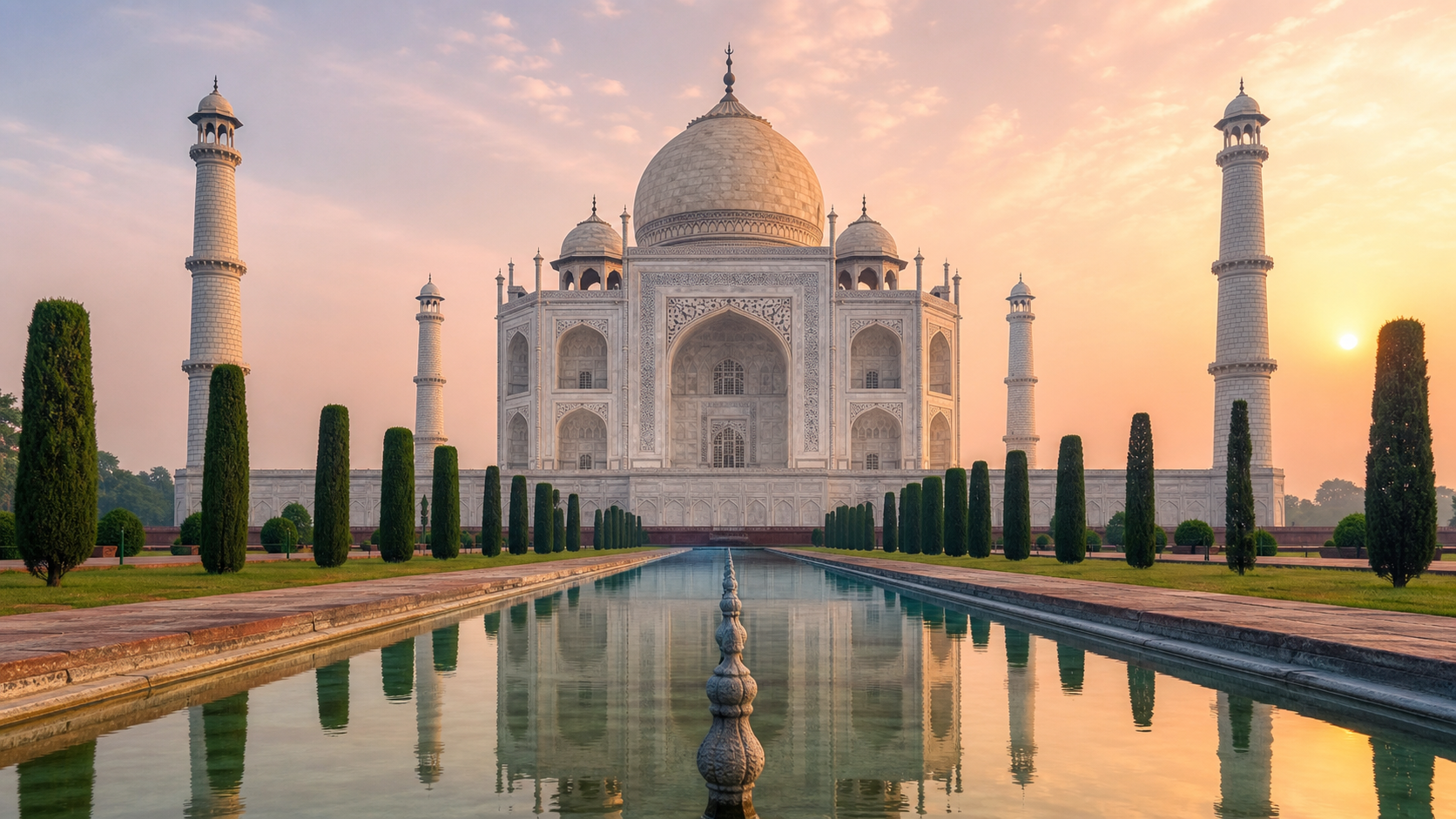
The air was thick with the scent of damp earth and blooming jasmine as I stepped out into the pre-dawn chill. A thick blanket of mist clung to the Yamuna River, obscuring the far banks. I stood quietly near the eastern gate, waiting. Then, as the first rays of the sun pierced the fog, a faint, iridescent glow emerged from the grayness. It wasn’t a sudden reveal, but a slow, dramatic unveiling. Before me stood the Taj Mahal, its cold white marble warming to a soft, blush pink under the morning light. It is a structure you have seen in countless photographs, yet standing before it, feeling the smooth, chilled stone beneath your bare feet, you realize no picture can capture its quiet, overwhelming mass.
The Chaos and the Calm
Agra is a city of sharp contrasts. Step outside the serene, manicured gardens of the Taj, and you are instantly swallowed by a beautiful, chaotic energy. The streets are a tangled web of honking auto-rickshaws, the vibrant flash of saris, and the calls of street vendors. It is a place where history doesn't just sit behind velvet ropes; it breathes down your neck.
Fascinating Fact: The Taj Mahal appears to change color depending on the time of day! It looks soft pink at dawn, dazzling white at noon, and a shimmering, pearlescent silver under the moonlight.
To understand Agra, you must taste it. As the morning shifted into afternoon, I found myself wandering through the narrow, crowded lanes of Sadar Bazaar. The air here is a complex perfume of roasting cumin, sweet incense, and exhaust. I stopped at a small, unassuming stall where a man was stirring a massive vat. This was the home of Petha, Agra's signature sweet made from ash gourd boiled in sugar syrup. Biting into the translucent, sticky cube, flavored with saffron and rose water, was a sugar rush that instantly cured my travel fatigue.
Later, dinner meant diving into the city’s rich Mughlai heritage—a plate of slow-cooked mutton rogan josh, the meat falling off the bone, mopped up with a blistered, garlic-laden naan.
The Hands of History
While the Taj Mahal commands the spotlight, Agra holds secrets for those willing to look closer. My most memorable encounter wasn't at a monument, but in a small, dusty workshop tucked down a quiet alley. Here, I met an artisan hunched over a slab of white marble. With steady, practiced hands, he was meticulously tapping tiny, colorful semi-precious stones into grooves carved into the rock.
Pro Tip: Don't just buy a miniature marble Taj Mahal from a street vendor. Seek out an authentic Pietra Dura workshop in the narrow alleys. Purchasing directly from a 14th-generation artisan ensures you get a genuine, handcrafted piece while supporting their dying art.
This is Pietra Dura, the same inlay work that adorns the Taj Mahal. He explained, with quiet pride, that his family had been practicing this craft for fourteen generations. Watching him work, chipping away at a piece of lapis lazuli, the history of the Mughal Empire suddenly felt deeply personal and alive.
The real surprise of the trip, however, lay hidden away from the usual tourist circuit. Seeking refuge from the midday crowds, I stumbled upon Chini-ka-Rauza. Unlike the grand sandstone and marble mausoleums that dominate the city, this tomb was a crumbling masterpiece of Persian architecture. Its exterior was covered in intricate, brightly colored glazed tiles—a stark, vibrant contrast to the surrounding landscape. I was the only person there, sharing the quiet space with a few resting pigeons and the echoing breeze. It was a moment of profound stillness in a city that rarely sleeps.
Navigating the Labyrinth
If you are planning to navigate this historical labyrinth, a few practical details will smooth your path.
When to Go
The ideal window is between October and March. The weather is pleasantly cool, making exploring the outdoor monuments comfortable. Avoid the scorching summer months of May and June, where temperatures can become unbearable.
Getting There and Around
Agra is easily accessible. The Gatimaan Express train from Delhi is fast, clean, and gets you there in under two hours. Once in the city, auto-rickshaws and cycle-rickshaws are your best bet for short distances. Negotiate the fare before you get in, or insist on using the meter, though the former is much more common.
Where to Stay and Budget
Accommodation caters to all wallets. The Taj Ganj area offers numerous budget-friendly guesthouses with rooftop views of the monument. For a splurge, luxury hotels located further out offer opulent Mughal-inspired rooms and private, uninterrupted views of the Taj. A moderate daily budget of $40 to $60 covers comfortable mid-range lodging, local transport, and plenty of delicious food.
Important: Agra is generally safe, but its popularity brings a notorious level of touts and aggressively persistent vendors. A firm but polite "no" is essential. When visiting the monuments, dress modestly, covering your shoulders and knees.
You will need to remove your shoes before stepping onto the main platforms of the Taj Mahal and inside mosques, so wear footwear that is easy to slip on and off.
The River's Reflection
As I prepared to leave Agra, I found myself back across the river at Mehtab Bagh, a garden complex aligned perfectly with the Taj Mahal. The sun was setting, casting long shadows and painting the marble monument in shades of deep amber and gold. I remembered the cold stone underfoot from that first morning and the warm, sticky sweetness of the afternoon's Petha. Agra is not just a backdrop for a famous tomb. It is a deeply textured, sensory experience where enduring love is etched in stone, and history continues to pulse vibrantly through its chaotic, beautiful streets.
Frequently Asked Questions (FAQs)
What day is the Taj Mahal closed?
The Taj Mahal is closed to general tourists every Friday for prayers at the mosque located within the complex.
Can I take photos inside the Taj Mahal?
Photography is strictly prohibited inside the main mausoleum where the tombs are located. However, you can take as many pictures as you like in the gardens and on the exterior platforms.
Is it better to visit the Taj Mahal at sunrise or sunset?
Sunrise is highly recommended! The crowds are significantly thinner, the morning light is incredibly soft, and you can escape the intense afternoon heat.
FAQ
What day is the Taj Mahal closed?
The Taj Mahal is closed to general tourists every Friday for prayers at the mosque located within the complex.
Can I take photos inside the Taj Mahal?
Photography is strictly prohibited inside the main mausoleum where the tombs are located. However, you can take as many pictures as you like in the gardens and on the exterior platforms.
Is it better to visit the Taj Mahal at sunrise or sunset?
Sunrise is highly recommended! The crowds are significantly thinner, the morning light is incredibly soft, and you can escape the intense afternoon heat.
Get more practical guides like this
Follow the RSS feed or send Sahi.info to your WhatsApp circle so the practical guides keep moving.