The "Low Gas" Lie: How AC Technicians in India Are Scamming You (And How to Stop Them)
Did you know over 60% of 'gas refill' requests are completely unnecessary? Discover the exact tactics dishonest AC repairmen use to overcharge you, and learn the practical steps to protect your money.
Avoid AC Scams: How to Spot Dishonest Technicians
Did you know that over 60% of "gas refill" requests in India during summer are completely unnecessary? That’s thousands of rupees draining from your wallet for a problem that doesn't even exist.
You turn on your AC on a sweltering May afternoon, and instead of a blast of arctic air, you get a weak, lukewarm breeze. Panic sets in. You call the first technician you find online. They take one look and declare, "Sir, gas leak hai. Refill karna padega." (Sir, there's a gas leak. We need to refill it).
Sound familiar? This is the exact moment many homeowners fall into a well-crafted trap.
In this article, you will learn the exact tactics dishonest AC repairmen use to overcharge you. More importantly, you'll discover simple, practical steps to protect your hard-earned money and keep your AC running ice-cold.
Ready to uncover the truth? Let’s start with the biggest scam of all.
The Infamous "Gas Refill" Scam
Here is a fact most technicians won't tell you: your AC’s refrigerant (the cooling gas) is housed in a closed, sealed system. It does not get "used up" like petrol in a car.
If your AC is low on gas, it means there is a physical leak. Period.
Yet, scammers will happily charge you ₹2,000 to ₹3,500 for a "gas top-up" without ever fixing the leak. A month later, the gas escapes again, and you are back to sweating in your living room. Some will even deliberately release a bit of gas from the valve to show you a "low pressure" reading on their gauge.
But here’s the surprising part: you can easily call their bluff.
Pro Tip: Next time a technician claims your gas is low, do not immediately agree to a refill. Instead, demand a nitrogen leak test. A genuine professional will pump nitrogen into the system, use a soap solution, and show you exactly where the bubbles are forming. If they refuse to find the leak first, ask them to leave immediately.
The "Dead Compressor" Deception
Your compressor is the heart of your AC, and replacing it can cost upwards of ₹10,000. Scammers know this is your worst fear, and they use it against you.
They might claim your compressor is dead when, in reality, a simple ₹300 capacitor has failed. A capacitor is a small cylindrical part that helps start the compressor. It fails often during voltage fluctuations.
Dishonest technicians will swap out the cheap capacitor, tell you they replaced the entire compressor, and hand you a massive bill.
Want to know how to spot this trick? It’s easier than you think.
Important: If a technician says your compressor or PCB (printed circuit board) needs replacing, tell them you need to think about it. Pay their visitation fee and send them away. Then, call a different, verified professional or the official brand service center for a second opinion.
The "Cheap Service" Bait and Switch
You see an ad for AC servicing for just ₹299. It seems like a steal. But once the technician opens your unit, the story changes.
Suddenly, your coils are "heavily corroded," your wiring is "dangerous," and that ₹299 service turns into a ₹4,000 repair bill. They create a false sense of urgency, claiming your AC will permanently break down if you don't act now.
The golden rule here is simple: if a price seems too good to be true, it is a bait to get a salesperson inside your home.
Fascinating Fact: Many local directories and low-end service apps allow unverified technicians to buy leads and present themselves as "experts." Always rely on trusted platforms that offer warranties on their work!
Your Quick Action Checklist
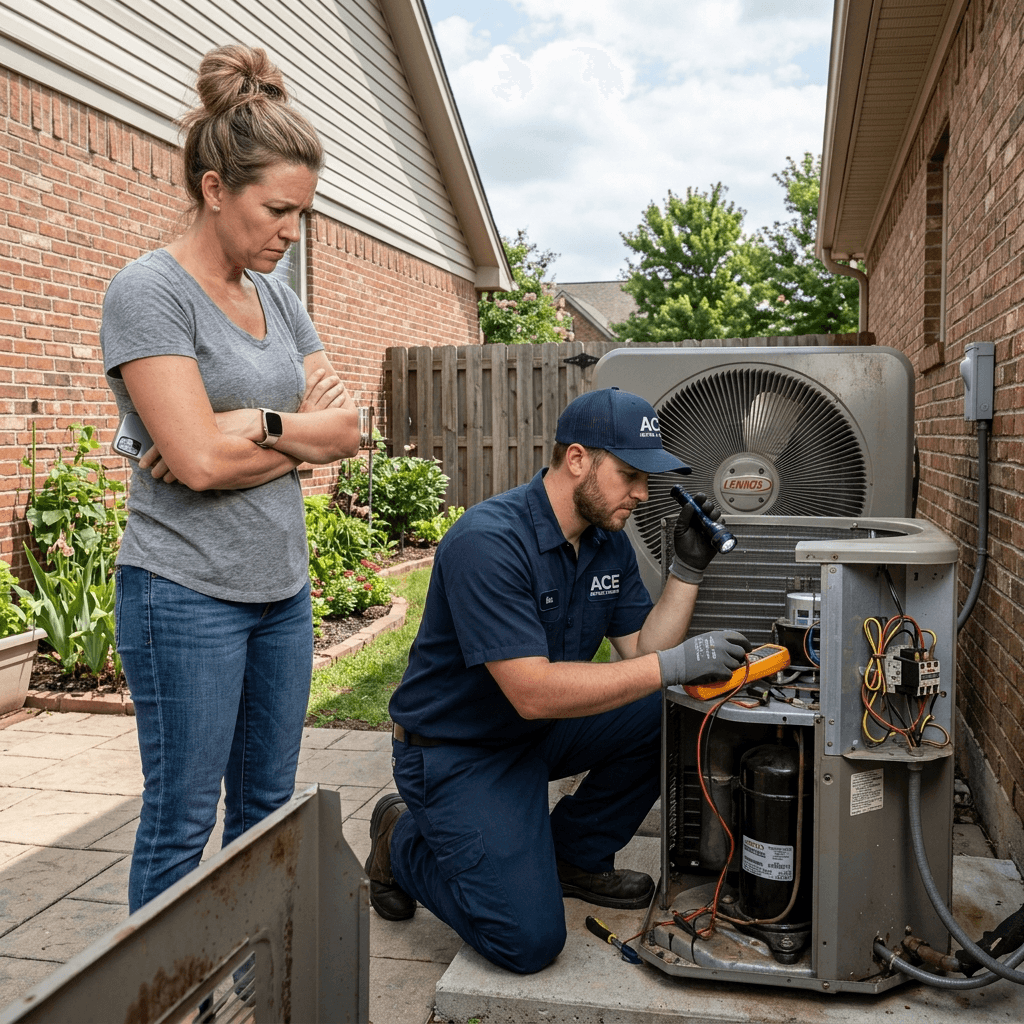
- Never leave them alone: Always supervise the technician while they work on your unit.
- Ask for the old parts: If they claim to replace a part, demand they leave the old, broken part with you.
- Verify the ID: Always ask for a company ID, especially if booking through third-party apps.
- Demand a written quote: Never authorize work without a clear, itemized estimate upfront.
The Key Takeaway
AC technicians rely on your lack of technical knowledge and the sheer desperation of a hot Indian summer. By asking the right questions—like demanding a leak test and getting second opinions on major repairs—you instantly shift the power back into your hands.
Don't let scammers turn your need for comfort into their payday.
Has an AC technician ever tried to pull one of these tricks on you? Bookmark this article so you have this checklist ready for your next service, and share it with your family WhatsApp group to protect them from the summer scams!
Frequently Asked Questions (FAQs)
How often should I actually refill my AC gas?
Ideally, never. AC gas doesn't evaporate or get used up. If your AC is losing gas, there is a physical leak that needs to be permanently welded or repaired before you add more gas.
How often should an AC be serviced?
For typical home usage in India, a comprehensive service (cleaning coils, checking filters, washing the outdoor unit) should be done once a year, right before summer begins.
Why does ice form on my AC’s indoor unit?
Ice formation is usually caused by restricted airflow (dirty filters or coils) or low refrigerant levels due to a leak. Have a professional check it, but ensure they don't jump straight to a "gas refill" without a proper diagnosis!
FAQ
How often should I actually refill my AC gas?
Ideally, never. AC gas doesn't evaporate or get used up. If your AC is losing gas, there is a physical leak that needs to be permanently welded or repaired before you add more gas.
How often should an AC be serviced?
For typical home usage in India, a comprehensive service (cleaning coils, checking filters, washing the outdoor unit) should be done once a year, right before summer begins.
Why does ice form on my AC’s indoor unit?
Ice formation is usually caused by restricted airflow (dirty filters or coils) or low refrigerant levels due to a leak. Have a professional check it, but ensure they don't jump straight to a "gas refill" without a proper diagnosis!
Get more practical guides like this
Follow the RSS feed or send Sahi.info to your WhatsApp circle so the practical guides keep moving.