Vietnam Travel Guide for Indians 2026: Hanoi, Halong Bay, Hoi An & Sapa — Everything You Need to Know
Vietnam is 2026's fastest-growing travel destination — Sapa ranked #1 in Asia, Hoi An is all over Instagram, and flights from India are under 5.5 hours. Here is the complete guide: visa, costs, best time to go, and a day-by-day itinerary.
A Symphony in the Chaos: Journeying Through Vietnam's Heart
The first time you step onto a street in Hanoi, your senses are immediately hijacked. A wave of humid air carries the sharp, intoxicating scent of star anise, simmering bone broth, and exhaust fumes. A seemingly impenetrable river of motorbikes flows past, carrying everything from families of four to towering stacks of live ducks.
You stand at the curb, heart pounding, waiting for a break in the traffic that will never come. The secret, a smiling street vendor gestures to you, is to just walk. Step off the curb, move at a slow, predictable pace, and let the chaos flow around you like water around a stone. You survive, you exhale, and just like that, Vietnam has pulled you into its rhythm.
This isn't a place you merely observe; it's a country you feel in your bones. Traveling from the frenetic energy of the north to the lantern-lit serenity of the central coast is less of a vacation and more of an awakening.
Finding the Soul of Hanoi
In the Old Quarter, street names dictate the wares sold beneath their fading French-colonial facades—Silk Street, Silver Street, Bamboo Street. I found myself pulled away from the main thoroughfares, following the rich aroma of roasted beans down a narrow, graffiti-lined alley. It led to a steep, hidden staircase opening into a tiny, dimly lit room.
Here, I tasted cà phê trứng, Hanoi’s famous egg coffee. The surprisingly delicate, meringue-like foam of whipped egg yolk and condensed milk perfectly balanced the bitter, dark robusta. Sitting on a tiny plastic stool, watching the city pulse below, I realized Hanoi's true magic lies in these hidden pockets of stillness amidst the roar.
Pro Tip: Don't be afraid to eat street food, but follow the locals. If a tiny stall has a huge line of Vietnamese office workers sitting on plastic stools, the food is guaranteed to be fresh, delicious, and safe.
The Quiet Grandeur of Halong Bay
Leaving the city behind, the journey shifts to the mythical. Most travelers rush to the main docks of Halong Bay, but taking a slightly longer route to the neighboring Lan Ha Bay offers the same emerald waters and towering limestone karsts with a fraction of the crowds.
Gliding through the morning mist on a wooden junk boat, the silence was absolute, broken only by the soft splash of the oars. We kayaked into hidden lagoons, the sheer rock walls echoing with the calls of hidden seabirds. It felt less like a tourist attraction and more like slipping into an ancient, forgotten world.
Into the Clouds of Sapa
The night train from Hanoi to the northern highlands rocks you to sleep and wakes you to a landscape painted in impossible shades of green. Sapa is a world of terraced rice paddies cascading down deep valleys, frequently swallowed by thick, rolling mist. Trekking alongside women from the Black Hmong and Red Dao communities, the physical exertion is rewarded with breathtaking vistas and profound hospitality.
It was here I stumbled upon my most unexpected discovery. Escaping a sudden downpour, my guide and I ducked into a small, tin-roofed structure that turned out to be a local family's impromptu indigo dyeing workshop. We spent the afternoon communicating through smiles and gestures, my hands stained a faint blue as the matriarch showed me how they coax the vibrant color from the earth.
Fascinating Fact: The traditional hemp clothing of the Hmong people takes months to create. The deep, rich blue comes from repeated dyeing in indigo vats, sometimes dipping the fabric up to 40 times to achieve the perfect, almost metallic sheen!
The Timeless Glow of Hoi An
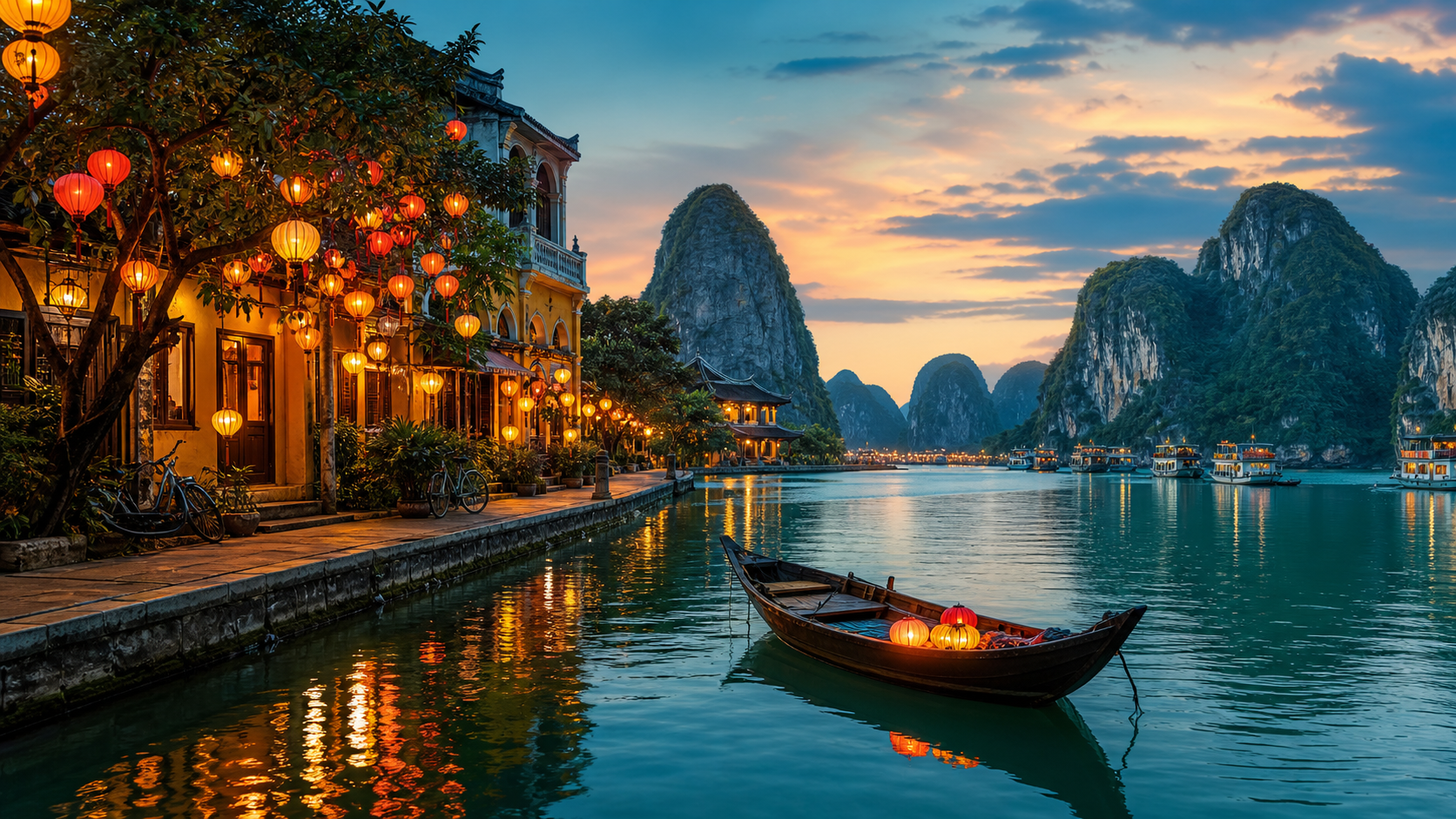
A short flight south brings you to the central coast and the ancient port town of Hoi An. Unlike the kinetic energy of Hanoi, Hoi An invites you to slow down. The mustard-yellow heritage buildings, draped in vibrant bougainvillea, line a river that reflects the glow of thousands of silk lanterns come nightfall.
The town is a culinary powerhouse. Skipping the tourist-heavy restaurants, I sought out a small, crowded stall in the central market for a bowl of Cao Lau. This hyper-local dish of chewy noodles, savory pork, and crisp greens gets its unique texture from water drawn only from a specific ancient well in the town. Every bite is a testament to generations of refined craftsmanship.
Navigating Your Own Vietnamese Adventure
To make the most of this journey, a little preparation goes a long way:
- Best Time to Visit: The spring (February to April) or autumn (August to October) offers mild, dry weather across both the north and central regions.
- Getting Around: Domestic flights between major hubs are cheap and efficient. For a classic experience, the Reunification Express train offers scenic travel.
- Approximate Budget: A mid-range budget of $50 to $80 a day covers charming boutique hotels, domestic transport, and feasts of street food.
- Accommodation: Opt for family-run boutique hotels in the cities, a traditional junk boat overnight on the bay, and a homestay in the Sapa valleys.
Important: Dress modestly when visiting temples—shoulders and knees must be covered. Always pass and receive items, especially money, with both hands as a sign of respect. And remember, public displays of anger cause everyone to "lose face"; a polite smile solves almost any problem.
The Lingering Echo
Waiting at the airport to leave, I found myself instinctively reaching for my camera as a motorbike loaded with an impossible tower of flowers zoomed past the terminal window. I stopped, realizing no photo could capture the feeling. I thought back to the deafening street corner in Hanoi where I first learned to walk through the traffic. I realized I was no longer holding my breath. Vietnam doesn't just give you a collection of pretty photographs; it rewires your pulse, leaving you with a lingering, beautiful chaos that echoes long after you’ve returned home.
Frequently Asked Questions (FAQs)
Q: Do I need a visa to visit Vietnam? A: Yes, most nationalities require a visa. The easiest method is to apply for an e-Visa online through the official government portal, which takes about 3-5 working days to process.
Q: Is it safe to cross the street in Hanoi or Ho Chi Minh City? A: It looks terrifying, but it works! The golden rule is to walk at a slow, steady, and predictable pace. Do not stop suddenly or step backward. The motorbike drivers will actively weave around you.
Q: Can I use credit cards everywhere? A: While hotels and upscale restaurants in major cities accept cards, Vietnam is still largely a cash-based economy. Always carry Vietnamese Dong for street food, markets, and small purchases.
Get more practical guides like this
Follow the RSS feed or send Sahi.info to your WhatsApp circle so the practical guides keep moving.