South Indian Breakfast Guide: Idli, Dosa, Vada, Pongal, Upma, and How to Choose a Good Place
A practical guide to South Indian breakfast classics and the signs of a truly good tiffin centre.
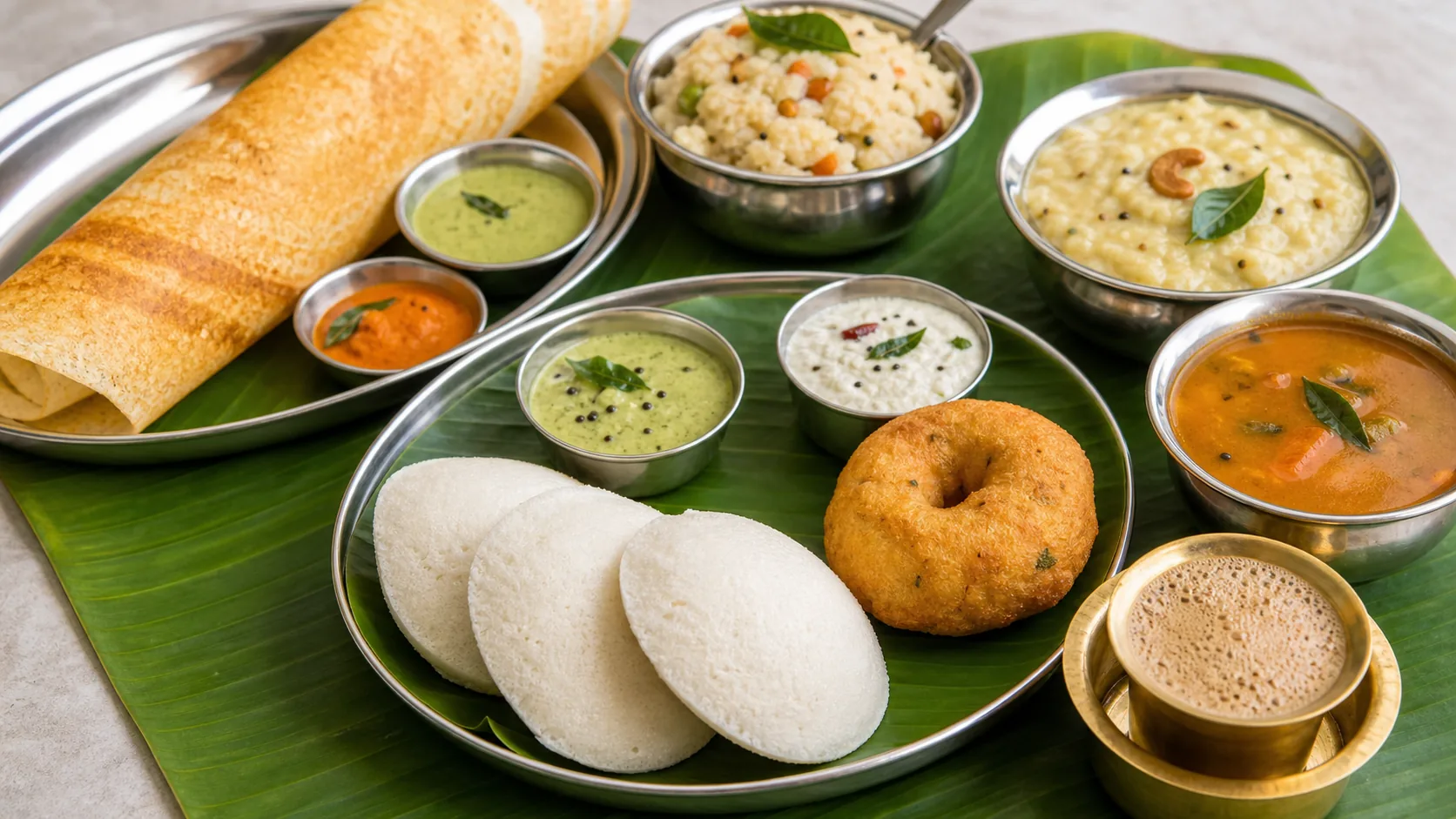
South Indian breakfast looks simple until you start paying attention. Idli, dosa, vada, pongal, upma, chutney, sambar, and filter coffee can reveal batter quality, kitchen rhythm, and freshness in one quick meal.
Idli and Dosa
Idli is the honesty test. It should be warm, soft, lightly fermented, and springy without becoming rubbery. Dosa should have crisp edges, a soft center, and a pleasant fermented aroma. If the batter tastes harshly sour or the dosa is greasy, the place is not at its best.
Vada, Pongal, and Upma
Medu vada should be crisp outside and fluffy inside, never oily or dense. Pongal should be creamy, peppery, and fragrant with cumin, ginger, curry leaves, and ghee. Upma deserves more respect than it gets: when the rava is roasted properly and the tempering is fresh, it becomes a filling, clean breakfast.
Chutney and Sambar
Fresh coconut chutney should taste clean, mildly sweet, and balanced with chilli and salt. Sambar should have dal body, tamarind brightness, vegetable sweetness, and aroma. Watery sambar and dull chutney usually mean the kitchen is cutting corners.
How to Pick a Place
Look for morning turnover. Fresh idli batches, active dosa tawas, hot vadas, steaming sambar, and quick-moving plates are good signs. If locals are ordering one specific item repeatedly, follow them. Tiffin places often have a hero dish.
Pro Tip: At a new breakfast place, order idli first. It cheaply tests batter, chutney, and sambar before you commit to a bigger order.
Fascinating Fact: The lightness of idli and dosa comes from fermentation, where rice and urad dal batter develops airiness and gentle tang.
FAQ
What is the best South Indian breakfast for beginners?
Start with idli, masala dosa, and filter coffee. It gives you softness, crispness, spice, and the classic coffee finish.
Is South Indian breakfast healthy?
It can be. Idli, pongal, and upma are gentler options, while vada and very oily dosa are heavier.
How do I know a dosa is good?
It should arrive hot with crisp edges, even browning, a soft center, and a clean fermented aroma.
Get more practical guides like this
Follow the RSS feed or send Sahi.info to your WhatsApp circle so the practical guides keep moving.