Gujarati Thali Explained: Sweet, Salty, Farsan, Dal, Kadhi, Rotli, and How to Eat It Well
A practical guide to Gujarati thali balance, from farsan and shaak to dal, kadhi, rotli, rice, and sweets.
A Gujarati thali can look like a busy plate of many bowls, but it follows a graceful logic: sweet, salty, sour, spicy, soft, crisp, dry, and liquid dishes working together. The joy is not quantity alone. It is balance.
The Core Plate
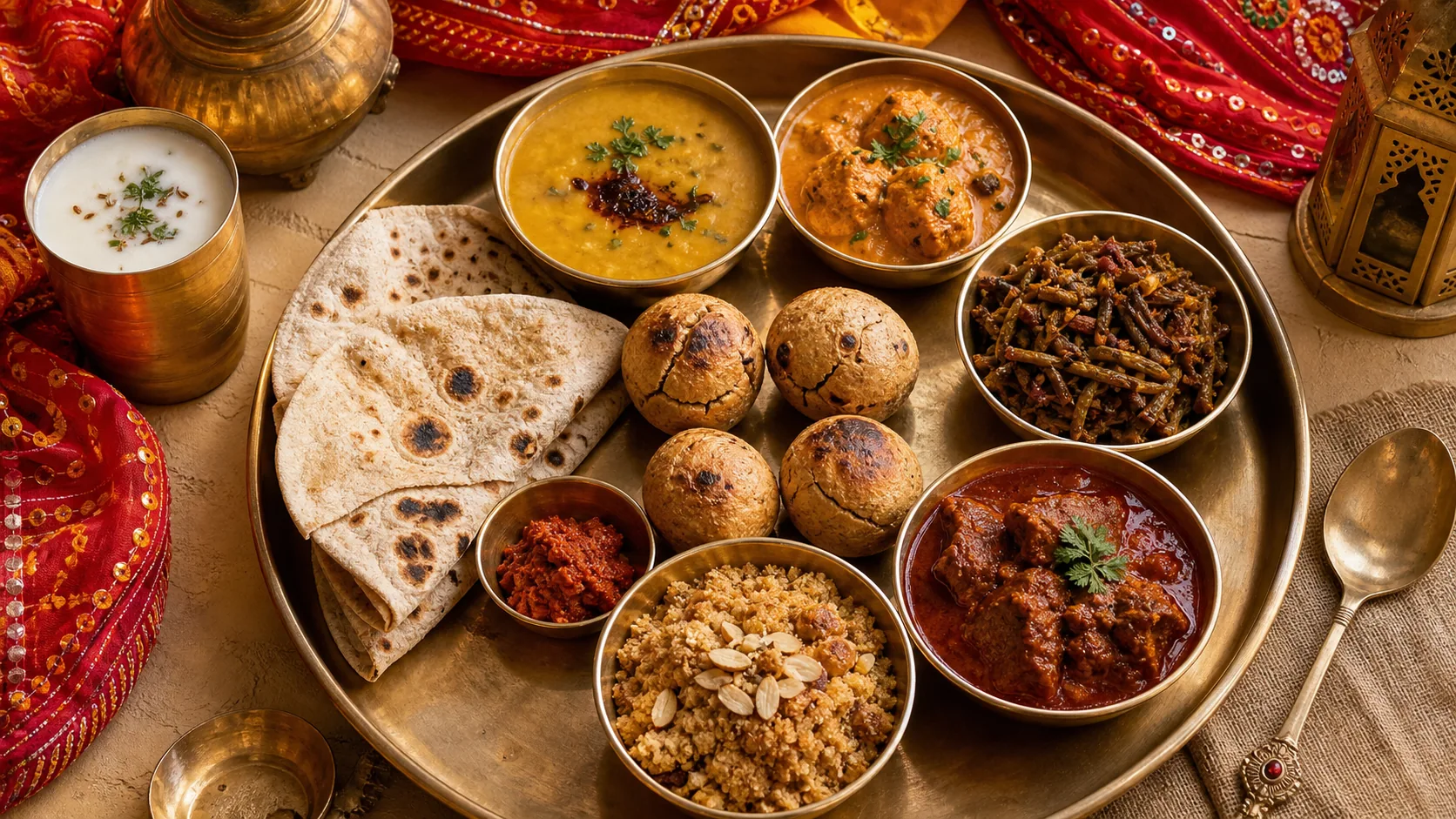
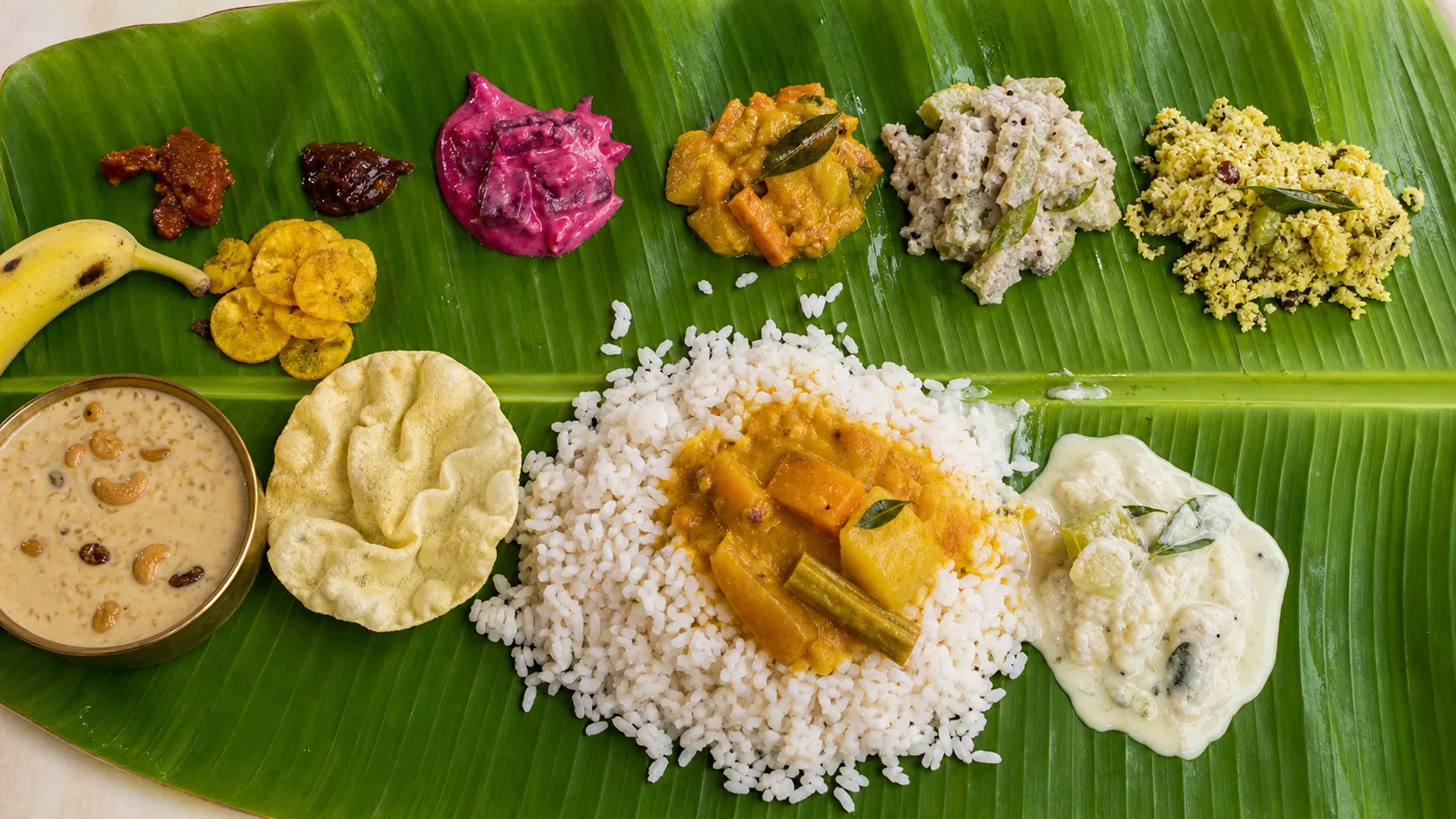
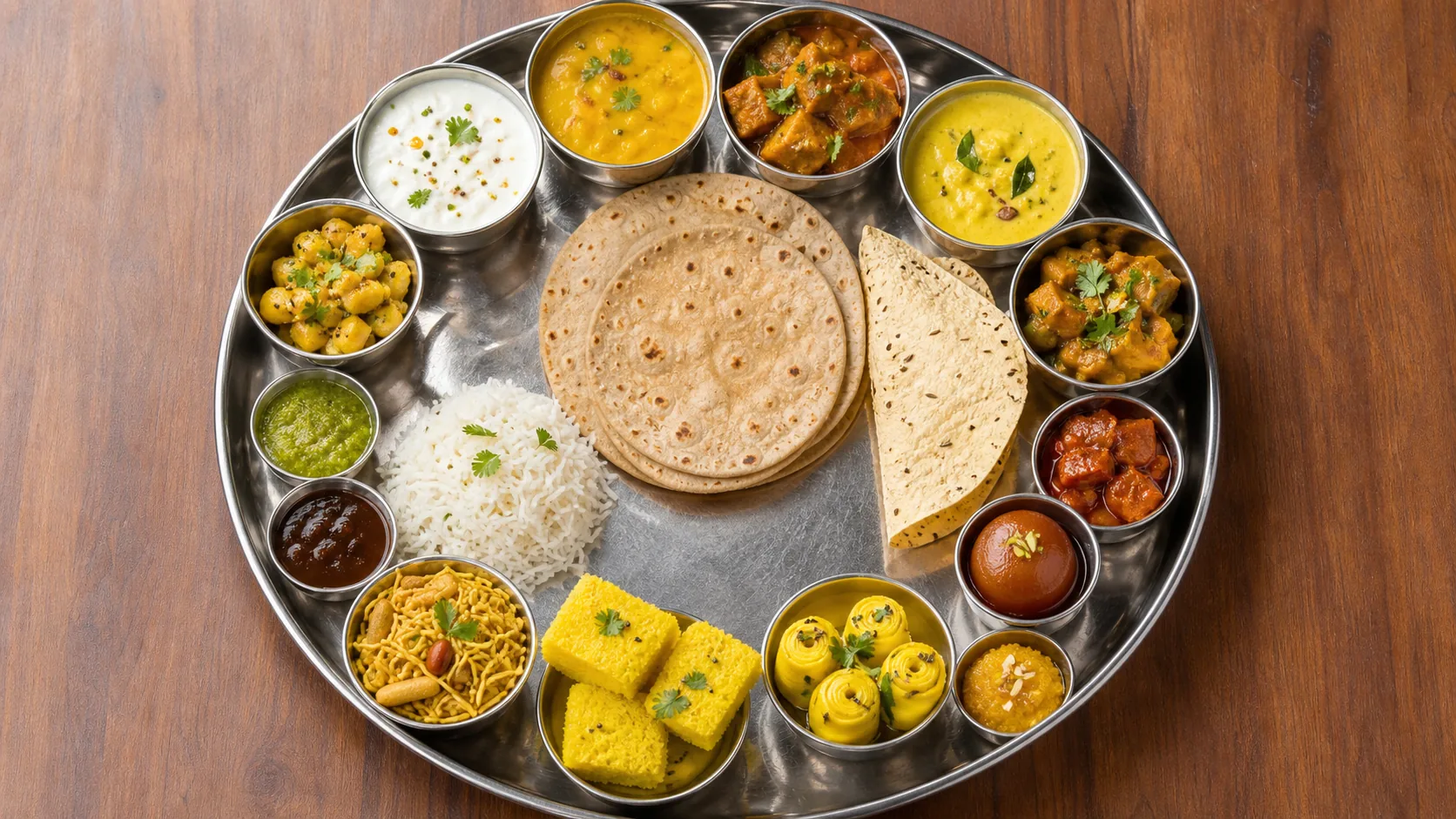
Rotli, shaak, dal, kadhi, rice, farsan, pickle, chutney, papad, salad, and sweets each have a job. Rotli carries dry vegetables. Dal and kadhi bring sweet-sour warmth. Rice resets the mouth. Papad and farsan add texture. Pickles and chutneys sharpen everything.
Why Sweet and Salty Work
Gujarati food often uses jaggery or sugar, but the sweetness is rarely alone. It balances tamarind, kokum, lemon, yogurt, chilli, and salt. In dal or kadhi, this creates roundness. In shaak, it can soften bitterness and make vegetables taste fuller.
Farsan and Sweets
Dhokla, khandvi, patra, muthiya, handvo, and kachori are not random extras. They create contrast. Sweets such as shrikhand, basundi, mohanthal, lapsi, or sukhdi may be eaten alongside the meal, not only at the end.
How to Eat It
Start with small portions. Try rotli with each shaak, then dal-rice, then kadhi-rice or khichdi. Use pickle and chutney sparingly. Do not mix everything at once. Gujarati thali rewards small comparisons, not one giant mash-up.
Pro Tip: In an unlimited thali, say no politely when you need a pause. Ask for more only of what you genuinely enjoy.
Fascinating Fact: The sweet note in many Gujarati dishes is linked to balance, preservation, climate, and vegetarian cooking traditions.
FAQ
What is included in a Gujarati thali?
Usually rotli or puri, shaak, dal, kadhi, rice or khichdi, farsan, pickle, chutney, papad, salad, and a sweet.
Why is Gujarati food sweet?
A little sweetness balances sour, salty, and spicy flavors. It is part of the structure, not just a dessertlike taste.
Should sweets be eaten first or last?
Both are acceptable. If you are new to the thali, taste a little early and save most for later.
Get more practical guides like this
Follow the RSS feed or send Sahi.info to your WhatsApp circle so the practical guides keep moving.