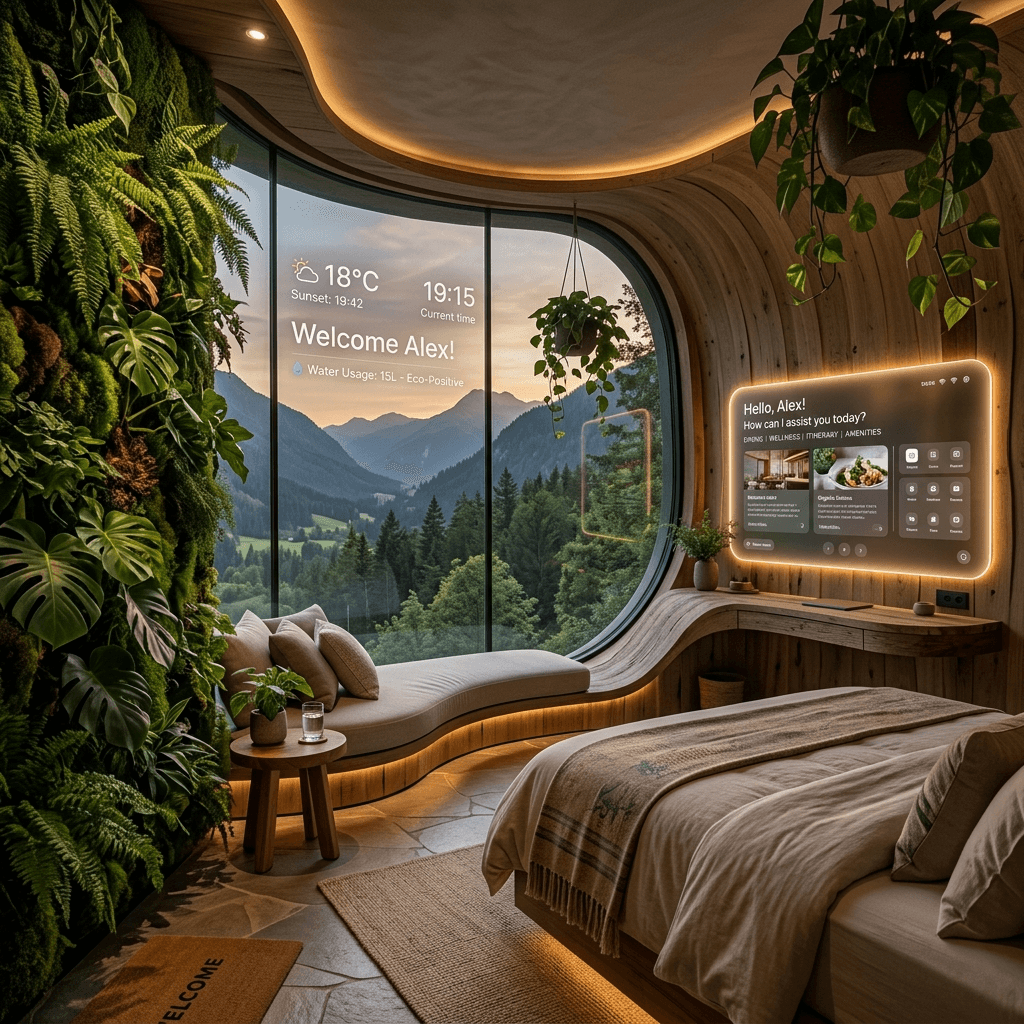
The Rise of AI and Regenerative Hospitality: Hotel Trends in 2026
As we move through 2026, the hotel industry is experiencing a profound shift. Artificial intelligence and deep-rooted sustainability are converging to redefine the modern guest experience.
The Evolution of Hospitality: Travel Trends in 2026
The hospitality landscape in 2026 is virtually unrecognizable from just a few years ago. At the forefront of this revolution is the seamless integration of Artificial Intelligence.
Gone are the days of rigid check-in times and static room environments. Today's premier hotels utilize hyper-personalized AI concierges that anticipate a guest's needs before they even arrive, seamlessly adjusting room temperatures, lighting, and dining preferences based on predictive behavioral models.
Fascinating Fact: Many luxury hotels now use biometric scanning at check-in, instantly matching your profile to adjust the room’s ambient lighting and music to your exact preferences before you open the door.
The Human-AI Partnership
Yet, despite this heavy reliance on technology, the industry is experiencing a massive pivot back to human-centric experiences. As AI handles the logistical and administrative burdens of hotel operations, human staff have been liberated to focus on genuine, empathetic connections.
This 'human-AI partnership' ensures that while the backend operates with robotic efficiency, the front-facing experience feels warmer and more authentic than ever before. You’ll find staff acting more like cultural guides and less like administrators.
The Rise of Regenerative Hospitality
Simultaneously, the conversation around sustainability has matured from simple 'greenwashing' into a measurable operational requirement. In 2026, regenerative hospitality is the new standard. Hotels are rapidly transitioning into zero-emission eco-resorts that actively improve their local environments.
From circular economy practices—where waste is entirely designed out of the guest experience—to intelligent energy grids that adapt in real-time to occupancy levels, luxury is now fully synonymous with environmental stewardship.
Important: When booking accommodations, look for the "Regenerative Certified" badge, which ensures the property actively gives back to the local ecosystem rather than just minimizing its carbon footprint.
A Transformative Guest Journey
Ultimately, the successful hotel of 2026 is one that bridges these seemingly contradictory forces. By merging the frictionless convenience of advanced artificial intelligence with a deep commitment to planetary health and authentic human connection, the industry has managed to elevate the guest journey into something truly transformative.
It is no longer just about a place to sleep; it is about an immersive, hyper-personalized, and guilt-free experience.
Pro Tip: Take advantage of your hotel's AI concierge app before your trip to input specific dietary needs or excursion interests, ensuring everything is perfectly curated upon arrival.
Frequently Asked Questions (FAQs)
What is a hyper-personalized AI concierge?
It is an advanced digital assistant integrated into the hotel's network that uses predictive analytics to anticipate and fulfill your specific needs, such as setting your preferred room temperature or recommending dining options based on your past behavior.
How does regenerative hospitality differ from eco-friendly hospitality?
While eco-friendly practices aim to reduce harm and minimize a carbon footprint, regenerative hospitality focuses on actively improving the local environment, such as restoring native wildlife or generating surplus renewable energy for the local community.
Will AI replace human hotel staff entirely?
No. The goal of AI in 2026 is to handle administrative and logistical tasks, thereby freeing up human staff to focus entirely on personal, empathetic, and authentic interactions with guests.
Photos

Descent of Phoenix with a crater in the background taken by Mars Reconnaissance Orbiter
Photo by NASA/Jet Propulsion Lab-Caltech/University of Arizona on Unsplash
WTTC Asia Leaders Forum 2019 - The Rise of Asian Cities (49083601308)
Photo by World Travel & Tourism Council on Unsplash
WTTC Asia Leaders Forum 2019 - The Rise of Asian Cities (49084116041)
Photo by World Travel & Tourism Council on UnsplashFAQ
What is a hyperpersonalized AI concierge?
It is an advanced digital assistant integrated into the hotel's network that uses predictive analytics to anticipate and fulfill your specific needs, such as setting your preferred room temperature or recommending dining options based on your past behavior.
How does regenerative hospitality differ from ecofriendly hospitality?
While ecofriendly practices aim to reduce harm and minimize a carbon footprint, regenerative hospitality focuses on actively improving the local environment, such as restoring native wildlife or generating surplus renewable energy for the local community.
Will AI replace human hotel staff entirely?
No. The goal of AI in 2026 is to handle administrative and logistical tasks, thereby freeing up human staff to focus entirely on personal, empathetic, and authentic interactions with guests.
Get more practical guides like this
Follow the RSS feed or send Sahi.info to your WhatsApp circle so the practical guides keep moving.
